In 2026, a “recycled” label without a verifiable digital twin is no longer a marketing claim; it’s a legal liability. As the EU Packaging and Packaging Waste Regulation (PPWR) transforms the industrial landscape, the demand for recycled plastic supply chain transparency has shifted from a corporate preference to a survival necessity. You understand the stakes. You face the rising costs of recycled HDPE, the complexity of California’s SB 54 reporting, and the persistent fear that an opaque supplier might trigger a greenwashing scandal.
We believe that industrial integrity begins with radical visibility. This article dismantles the misconceptions surrounding circular materials and provides the tools to secure a high-quality, traceable supply chain. We examine three critical pillars: rigorous material origin verification, the evolution of certifications like GRS and ISCC PLUS, and the procurement of reliable, certified circular polymers. By moving from fragmented data to systemic clarity, you can meet compliance mandates while ensuring your transition to a circular economy is both authentic and enduring.
Key Takeaways
- Dismantle the “black box” myth by learning how to verify the specific industrial origins of post-use plastic waste.
- Master the tripartite logic of circularity, Collection, Purification, and Transformation, to ensure material consistency and systemic integrity.
- Establish a rigorous framework for recycled plastic supply chain transparency to mitigate greenwashing risks and meet 2026 regulatory mandates.
- Navigate the hierarchy of trust by prioritizing third-party audits over self-declared claims for circular HDPE and PP.
- Utilize a professional 2026 sourcing checklist to secure a reliable supply of high-quality, certified circular polymers for industrial applications.
Myth vs. Reality: Why ‘Recycled’ Doesn’t Always Mean ‘Transparent’
The “Recycling Black Box” is a convenient fiction. For years, the industry has operated under the assumption that once plastic waste enters the recovery stream, its specific history becomes unknowable. This is a strategic obfuscation. In reality, the origin of industrial waste, such as maritime ropes or agricultural films, is entirely traceable when the right systems are prioritized. Without a clear chain-of-custody, a “recycled” label is just a word; it isn’t a guarantee of systemic integrity or environmental benefit.
Many manufacturers fall into the trap of believing that all recycled PP and PE pellets offer identical environmental value. They don’t. A pellet derived from a verifiable industrial source, like decommissioned fishing nets, carries a different ecological weight than one sourced from a nebulous mix of consumer waste. To navigate this, professionals must look beyond the Technical Data Sheet. While a TDS confirms physical properties, it remains silent on the material’s biography. True recycled plastic supply chain transparency requires knowing exactly where the waste was generated, who processed it, and how it was transformed.
The Hidden Risks of Opaque Supply Chains
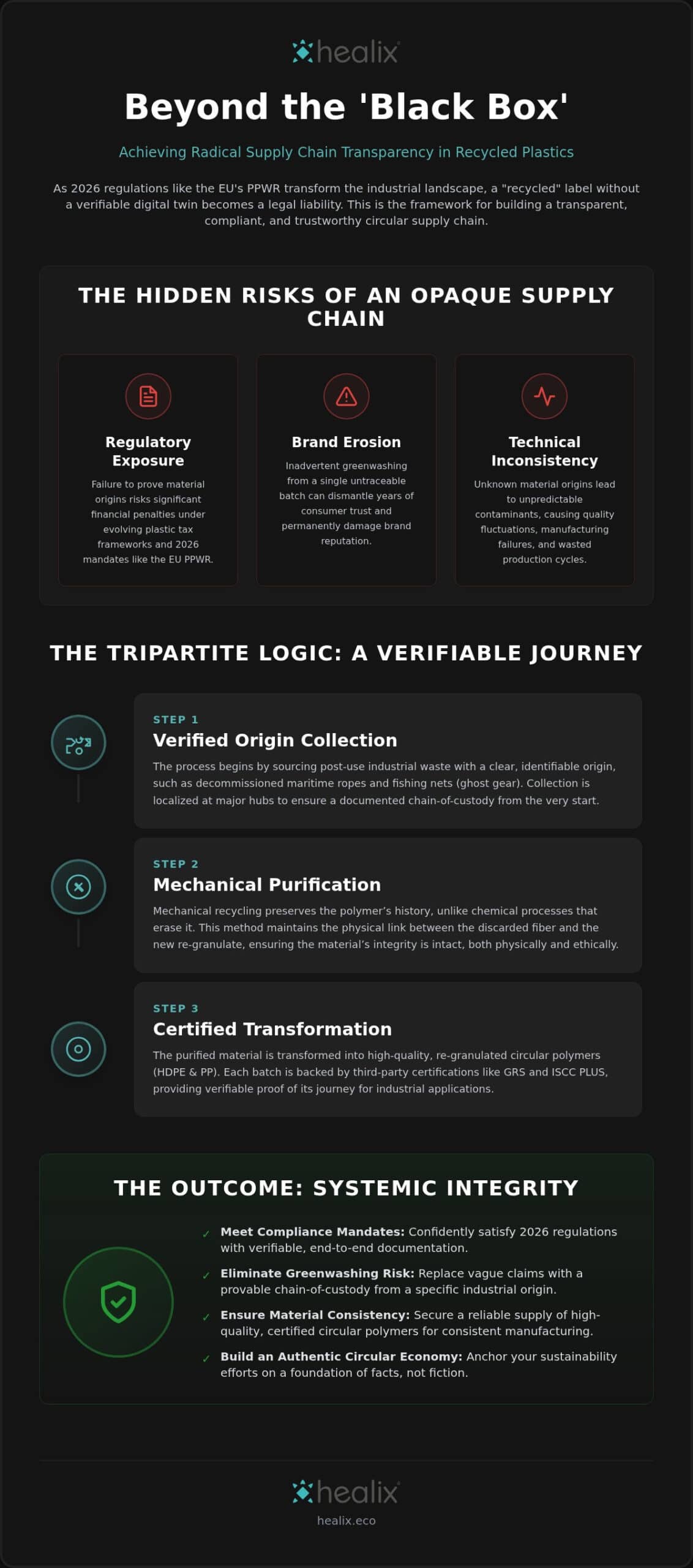
Operating with an opaque supply chain creates three distinct vulnerabilities: regulatory exposure, brand erosion, and technical inconsistency. With the EU Packaging and Packaging Waste Regulation (PPWR) entering into force on August 12, 2026, the era of self-declared compliance is over. Companies that cannot prove the origin of their materials face significant financial penalties under evolving plastic tax frameworks. Beyond the balance sheet, the cost of inadvertent greenwashing is at an all-time high. A single untraceable batch can dismantle years of consumer trust. Finally, opaque sourcing often leads to quality fluctuations. When you don’t know the source, you can’t predict the contaminants, which leads to manufacturing failures and wasted production cycles.
Defining Radical Transparency in 2026
Radical transparency requires a shift from vague “post-consumer” claims to verified industrial origins. By focusing on the plastic recycling process through mechanical means, we can preserve the material’s history rather than erasing it. Mechanical recycling allows for a direct link between the discarded industrial fiber and the new re-granulate, ensuring that the polymer’s integrity remains intact both physically and ethically.
Supply chain transparency in the circular polymer sector is the verifiable, end-to-end documentation of a material’s journey from its specific industrial origin to its final re-granulate form. Achieving this level of recycled plastic supply chain transparency is the only way to ensure that your circular transition is built on a foundation of facts rather than myths.
The Mechanics of Traceability: From Ghost Nets to Certified Pellets
The restoration of our oceans and the integrity of our industries depend on a rigorous, documented process. To achieve true recycled plastic supply chain transparency, we employ a tripartite logic: Collection, Purification, and Transformation. This methodical approach ensures that every kilogram of material is accounted for, moving from the chaos of maritime waste to the precision of a certified circular polymer. By establishing a clear chain-of-custody at the point of origin, we eliminate the ambiguity that often plagues recycled material markets.
The Journey of Industrial Fiber Waste
Ghost gear, comprised of discarded fishing nets and ropes, represents a unique industrial challenge. Unlike mixed consumer waste, these materials have a clear, identifiable origin. By localizing collection points at major maritime hubs, we reduce logistics emissions while maintaining a direct line of sight to the material’s source. This controlled intake is the bedrock of a reliable supply chain. It allows manufacturers to move beyond vague claims and point to specific, tangible environmental restoration efforts. For a deeper look at these strategies, consult our Sustainable Sourcing of Recycled Plastics: 2026 Guide.
Purification as a Transparency Tool
Mechanical recycling acts as a powerful tool for transparency because it preserves the polymer’s ancestry. While chemical recycling often erases the material’s history through molecular breakdown, mechanical processes maintain the physical link between the waste and the new re-granulate. This alignment with the National Recycling Strategy emphasizes the need for high-quality data and measurable outcomes. Through advanced purification, we remove maritime contaminants and perform rigorous lab testing to verify chemical purity. This ensures that circular raw materials meet industrial-grade specifications for demanding sectors like automotive and packaging.
The final transformation involves compounding these purified materials into high-quality recycled PP and PE pellets. We utilize mass balance principles to ensure that the volume of certified material entering the system matches the output. This accountability is what transforms a simple raw material into a tool for systemic change. Securing a reliable supply of certified circular plastic is the first step toward industrial resilience in a landscape where recycled plastic supply chain transparency is the new global standard.
Evaluating Verification Frameworks: Beyond Simple Claims
Simple claims of “ocean-bound” plastic are no longer sufficient for global manufacturers operating in 2026. The market has matured beyond the era of vague sustainability narratives, demanding instead a rigorous hierarchy of trust. At the bottom of this hierarchy sits the self-declaration, a statement of intent that lacks independent verification. At the top, we find third-party audits that provide the necessary recycled plastic supply chain transparency to satisfy both regulators and discerning consumers. Without these external validations, a brand’s circular claims are built on a foundation of sand.
Certifications like the Global Recycled Standard (GRS) and ISCC PLUS act as a standardized language for the industry. They transform an abstract environmental benefit into a quantifiable industrial asset. Organizations like Plastics For Change have demonstrated how connecting collectors with brands through transparent models creates systemic integrity. When a manufacturer purchases certified recycled PP granules, they aren’t just buying material; they’re investing in a documented history that protects their brand from accusations of “circular washing.” These frameworks ensure that every claim is backed by a forensic trail of evidence.
Key Certifications for Circular Polymers
The Global Recycled Standard (GRS) remains a cornerstone for tracking the social and environmental footprint of materials. It ensures that recycled content claims are backed by robust chain-of-custody requirements from the source to the final product. Meanwhile, ISCC PLUS has emerged as the gold standard for mass balance and circularity, particularly for complex industrial supply chains. It provides a reliable method for verifying that the volume of certified circular plastic entering the system matches the volume sold. For a detailed breakdown of how these frameworks differ, refer to our Recycled Ocean Plastic Certification Comparison Guide.
Red Flags in Recycled Plastic Sourcing
Identifying “circular washing” requires a keen eye for inconsistencies in documentation and pricing. A primary red flag is the inability of a supplier to name the original waste stream or the specific collection region. If a vendor cannot provide batch-level documentation or a clear audit trail, the material’s integrity is compromised. Additionally, suspiciously low pricing often suggests that the material has been blended with virgin resins or sourced through unethical channels. In an era where recycled plastic supply chain transparency is paramount, if the data is missing, the circularity doesn’t exist. True transparency demands that we look past the price tag to the provenance of the polymer.
Building a Transparent Sourcing Framework: A 2026 Checklist
The transition from theoretical risk to operational resilience demands a systematic approach. Establishing recycled plastic supply chain transparency is a mission-critical objective that requires moving beyond passive acceptance of supplier claims. You can’t manage what you can’t measure. Procurement teams must audit existing material streams and redefine the criteria for future partnerships. By integrating specific transparency requirements into your RFPs for circular HDPE and PP, you create a defensive barrier against non-compliance and reputational damage. Start by mapping your material flow from the point of origin to your factory gate, verifying third-party certificates for every batch, and cross-referencing volumes with mass balance reports.
Aligning your material sourcing with the EU Plastic Tax Compliance Checklist ensures that your circular transition remains financially viable. Transparency isn’t just a cost; it’s a significant value driver. Brands that can prove the ecological biography of their polymers often command a premium in consumer-facing markets where authenticity is the primary currency. This data-driven approach transforms recycled plastic supply chain transparency from a regulatory burden into a competitive advantage.
Procurement Questions for Potential Suppliers
To vet a supplier effectively, you need to ask pointed, technical questions that reveal the depth of their traceability. Ask if they can provide a full chain-of-custody report that tracks the material from the initial waste source to the final pellet. Inquire about the percentage of their material that’s mechanically recycled versus chemically processed, as mechanical recycling better preserves the material’s ancestry. Finally, demand documentation on how they ensure consistent quality across different batches of re-granulate. If a supplier hesitates to share this data, it’s a clear signal of underlying supply chain opacity.
Future-Proofing for 2026 Regulations
Preparation for the Digital Product Passport (DPP) requirements is no longer optional. These regulations will soon mandate a level of data accessibility that only transparent supply chains can provide. High-level transparency directly reduces the financial burden of plastic taxes by providing the evidence needed for exemptions and lower rates. Furthermore, the long-term value of partnering with a reliable circular HDPE supplier cannot be overstated. These partnerships provide the stability and material integrity required to navigate a volatile global market. If you’re ready to secure your supply with a partner committed to systemic integrity, discover our range of certified circular plastic pellets.
Healix: Forging Systemic Integrity from Industrial Waste
The global plastic crisis demands more than incremental change; it requires a fundamental re-engineering of material origin. At Healix, our mission is to dismantle the legacy of industrial waste by transforming discarded recycled fishnets and maritime ropes into high-quality circular polymers. We don’t just provide a service; we act as a visionary guide for manufacturers seeking to redefine their ethical boundaries. By focusing on the most challenging industrial fiber waste, we provide the technical foundation for a future where production and restoration are no longer mutually exclusive.
We provide the radical recycled plastic supply chain transparency necessary for high-stakes industrial applications. In an era where regulatory scrutiny is absolute, our methodology ensures that every pellet we produce carries a verifiable biography. This is the difference between a simple commodity and a tool for systemic transformation. We invite global leaders to move beyond the despair of the plastic crisis and embrace the confident, solution-oriented optimism of a truly circular supply chain.
From Ghost Nets to Industrial Raw Materials
Our production process follows a rigorous tripartite logic: controlled collection, advanced mechanical purification, and precision transformation. By specializing in industrial fiber waste like maritime ropes and aquaculture bigbags, we ensure that our feedstock is both identifiable and consistent. This mechanical approach preserves the polymer’s history, allowing us to provide batch-level documentation for every kilogram of recycled PP and PE we produce. This level of detail is essential for meeting the strict reporting requirements of 2026. For a comprehensive look at how to evaluate these materials, consult The Buyer’s Guide to Certified Circular Polymers.
- Direct intake of industrial maritime and agricultural fiber waste.
- Mechanical recycling technology that maintains material ancestry.
- Advanced purification to remove maritime contaminants and ensure industrial-grade re-granulate.
Partnering for a Circular Future
Global manufacturing leaders choose Healix because we bridge the gap between technical performance and environmental stewardship. Choosing our certified recycled plastic doesn’t just improve your ESG reporting; it demonstrates a commitment to restoring ecological health at a systemic level. Recycling one ton of industrial fishing nets eliminates a persistent threat to maritime biodiversity while simultaneously securing a high-performance raw material for the circular economy.
By integrating our high quality recycled pellets into your production lines, you achieve recycled plastic supply chain transparency that withstands the most rigorous audits. We don’t just sell polymers; we offer a partnership in systemic integrity. Together, we can ensure that the industrial materials of 2026 are defined by their contribution to the planet, rather than their extraction from it.
Securing the Future of Circular Manufacturing
This commitment to provenance is increasingly important for manufacturers of sustainable building materials. To see how these principles are applied in the construction industry, you can discover Paveezzi Composites and their range of premium composite cladding.
The industrial landscape of 2026 demands a departure from opacity. We’ve seen that material integrity depends on a verifiable biography, moving from the uncontrolled collection of the past to a documented tripartite logic of restoration. By prioritizing third-party certifications and rigorous sourcing frameworks, your organization can move beyond the fear of greenwashing and the financial burden of non-compliance. Achieving authentic recycled plastic supply chain transparency isn’t just about meeting a mandate; it’s about leading a global movement toward systemic restoration.
As mechanical recycling specialists, we’re dedicated to transforming ghost nets into high-performance raw materials. We provide the certified circular plastic production necessary for the most demanding industrial applications. By choosing our industrial-grade PE and PP pellets, you aren’t just procuring a material; you’re securing a partnership in ethical innovation. It’s time to redefine what’s possible for your supply chain. Secure your transparent supply of certified circular polymers today and join us in building a resilient, circular future that honors both the planet and its people.
Frequently Asked Questions
Is recycled plastic supply chain transparency actually achievable for ocean waste?
Yes, transparency is achievable through the controlled collection of industrial maritime waste like fishing nets and ropes. Unlike fragmented consumer waste, industrial fiber waste originates from identifiable sources. By establishing local collection points and maintaining a rigorous chain-of-custody, manufacturers can track material from the sea to the factory. This level of recycled plastic supply chain transparency ensures that “ocean-bound” claims are backed by forensic data rather than marketing narratives.
How does transparency affect the price of recycled PP pellets?
Transparency involves a higher initial verification cost but provides long-term financial stability. While untraceable materials may appear cheaper, they carry hidden risks of regulatory fines and brand damage. Verified, high-quality pellets command a premium because they guarantee material origin and technical consistency. Investing in transparent sourcing reduces the volatility associated with opaque markets; it’s a strategic move to secure reliable, industrial-grade circular raw materials for high-stakes manufacturing.
Can transparent sourcing help with EU Plastic Tax compliance in 2026?
Transparent sourcing is the primary mechanism for ensuring compliance with the EU Packaging and Packaging Waste Regulation (PPWR). As of August 2026, regulators require robust evidence of recycled content to justify tax exemptions or reduced rates. Without recycled plastic supply chain transparency, companies cannot prove their materials meet the mandatory thresholds. Documentation provided through a transparent supply chain acts as a legal shield, protecting your organization from the financial burden of non-compliance.
What is the difference between GRS and ISCC PLUS certifications?
The Global Recycled Standard (GRS) focuses on the social and environmental footprint throughout the entire supply chain. It requires a high percentage of recycled content and strict chemical restrictions. In contrast, ISCC PLUS is the gold standard for mass balance, allowing for the tracking of circular and bio-based materials in complex industrial systems. Both certifications provide a standardized language for trust, but they serve different roles in verifying material integrity and ethical production.
Why is mechanical recycling preferred for supply chain transparency?
Mechanical recycling is preferred because it preserves the polymer’s physical ancestry. Unlike chemical recycling, which breaks materials down to their molecular level and erases their history, mechanical processes maintain a direct link between the waste source and the final re-granulate. This physical continuity makes it easier to audit and document the journey of the plastic. It ensures that the environmental restoration story remains intact from the initial collection to the production of new pellets.
How can I verify the origin of recycled plastic from a new supplier?
Verification requires a systematic audit of the supplier’s documentation and physical processes. You should:
- Request a full chain-of-custody report from the waste source.
- Verify third-party certificates such as GRS or ISCC PLUS.
- Cross-reference batch numbers with mass balance data.
- Conduct on-site audits or request lab testing results.
A reliable supplier will provide these documents proactively to demonstrate their commitment to material integrity and systemic clarity.
What are the common myths about recycled plastic quality and traceability?
A common myth is that recycled materials inherently possess lower quality than virgin resins. In reality, advanced purification and mechanical recycling produce high-quality recycled pellets that meet industrial specifications. Another myth suggests that tracing the origin of maritime waste is impossible. By focusing on industrial fiber waste rather than mixed consumer streams, we prove that traceability is not only possible but essential for maintaining consistent material properties and ethical standards in 2026.
Does Healix provide certification for all its circular polymers?
Healix provides comprehensive certification for its entire range of circular polymers, including recycled PP and PE. We emphasize third-party audits to ensure our materials meet the highest standards for quality and traceability. Every batch of re-granulate we produce is backed by the documentation needed for global regulatory compliance. This commitment to systemic integrity allows our partners to integrate recycled maritime waste into their products with absolute confidence in the material’s origin.