The era of relying on virgin fossil fuels to power our manufacturing is rapidly reaching its expiration date. While global demand for plastic continues to rise, the traditional linear model has become a liability for both the planet and your bottom line. Transitioning to a sustainable feedstock for plastic production is no longer a peripheral corporate social responsibility goal; it’s a core requirement for industrial resilience. You’ve likely felt the mounting pressure from regulators to slash carbon emissions, yet the fear of inconsistent recycled batches often stalls meaningful progress.
We understand that a lack of transparency in the supply chain makes it difficult to commit to circularity. This article provides the strategic roadmap you need to transition your production lines with confidence. You’ll learn how to identify, evaluate, and integrate high-quality circular polymers that meet your technical specifications while delivering verified carbon reduction data. We’ll break down the process into three actionable phases: securing a certified supply of recycled PP, optimizing your machinery for high-quality re-granulate, and validating the environmental impact of your final product. Together, we can redefine the ethical boundaries of manufacturing.
Key Takeaways
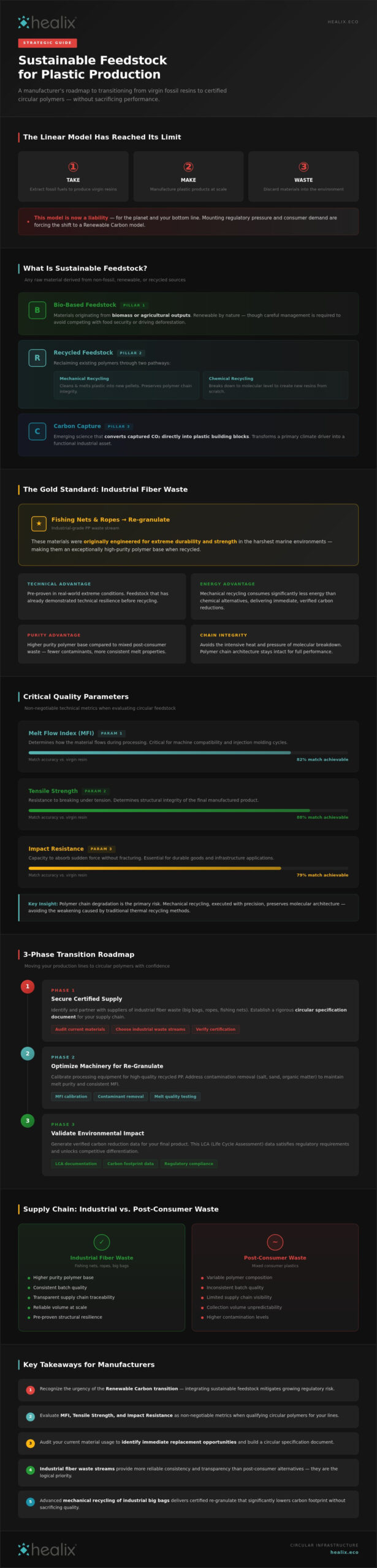
- Recognize the urgency of the global renewable carbon transition and why it’s vital to integrate a sustainable feedstock for plastic production to mitigate regulatory risks.
- Evaluate critical performance metrics like Melt Flow Index and impact resistance to ensure your circular polymers match the technical integrity of virgin resins.
- Audit your current material usage to identify immediate opportunities for replacement and establish a rigorous circular specification document for your supply chain.
- Secure your production future by choosing industrial fiber waste streams that provide more reliable consistency and transparency than post-consumer alternatives.
- Leverage advanced mechanical recycling to transform industrial big bags into certified re-granulate that significantly lowers your carbon footprint without sacrificing quality.
Understanding Sustainable Feedstock for Plastic Production
The global plastics industry stands at a critical crossroads. For decades, the sector operated on a linear model: extract fossil fuels, manufacture products, and discard them into the environment. This “Take-Make-Waste” failure has reached its limit. We must now embrace the “Renewable Carbon” transition to decouple production from fossil depletion. A sustainable feedstock for plastic production includes any raw material derived from non-fossil, renewable, or recycled sources. It’s the foundation of a circular economy that treats waste as a valuable resource rather than a liability.
Transitioning to circularity requires more than just a change in materials. It demands a total systemic overhaul. Industrial waste streams, such as big bags and ropes, offer the stability and volume needed to replace virgin resins at scale. Securing a consistent sustainable feedstock for plastic production is now the primary challenge for manufacturers who want to stay ahead of upcoming regulations and consumer demand. By redirecting these materials back into the supply chain, we eliminate fossil fuel dependency and restore ecological health.
The Three Main Pillars of Sustainable Feedstock
The industry categorizes sustainable inputs into three distinct pathways. Each offers unique benefits for different manufacturing needs:
- Bio-based Feedstock: These materials originate from biomass or agricultural outputs. They’re renewable, though they must be managed carefully to avoid competing with food security or driving deforestation.
- Recycled Feedstock: This involves reclaiming existing polymers. Mechanical recycling cleans and melts plastic into new pellets, while chemical recycling breaks materials down to a molecular level to create new resins.
- Carbon Capture: This emerging science converts captured CO2 directly into plastic building blocks. It’s a bold innovation that transforms a primary driver of climate change into a functional industrial asset.
Why Industrial Fiber Waste is the “Gold Standard”
Not all recycled materials are equal. Industrial fiber waste, specifically fishing nets and ropes, provides an exceptionally high-purity polymer base. These materials were originally engineered for extreme durability and strength. When manufacturers integrate recycled fishing gear raw materials, they’re working with a feedstock that has already proven its technical resilience in the harshest environments.
The environmental advantage is equally compelling. Mechanical recycling of technical fibers consumes significantly less energy than chemical alternatives. It preserves the integrity of the polymer chain, avoiding the intensive heat and pressure required for molecular breakdown. This efficiency makes it the logical choice for companies seeking immediate, verified carbon reductions without compromising the structural performance of their products.
Evaluating the Quality and Performance of Circular Feedstock
Quality is the cornerstone of industrial integrity. When you transition to a sustainable feedstock for plastic production, the technical specifications must remain non-negotiable. Manufacturers often fear that circularity requires a compromise on performance, but modern mechanical recycling proves otherwise. We focus on three critical technical parameters: Melt Flow Index (MFI), Tensile Strength, and Impact Resistance. These metrics ensure that your recycled inputs match the rigorous demands of your production lines. High-quality re-granulate isn’t an inferior substitute; it’s a precision-engineered material ready for the most demanding applications.
The secret to maintaining high performance lies in preserving polymer chain integrity. Traditional thermal recycling methods often lead to molecular degradation, which shortens the chains and weakens the final product. Mechanical recycling, when executed with precision, avoids this pitfall. It cleans and processes the material while keeping the molecular architecture intact. This process is particularly effective for technical fibers like fishing nets and ropes. We must rigorously remove maritime contaminants like salt, sand, and organic matter that could otherwise compromise the purity of the melt. You can explore our certified circular plastic to see how these standards are maintained in practice.
Certification and Traceability Frameworks
Trust is built on verification. The Global Recycled Standard (GRS) serves as the industry’s primary tool for verifying the origin and ethical processing of feedstock. For many manufacturers, the choice between mass balance and physical segregation is pivotal. While mass balance allows for blended streams, physical segregation provides the highest level of transparency. This ensures that every pellet in your facility is traced back to a specific waste source. This level of traceability is essential for meeting REACH compliance and other global chemical regulations, providing the legal and ethical security your brand requires.
Testing Protocols for Circular PP and PE
Consistency is the enemy of production downtime. To ensure batch-to-batch reliability, standardized testing protocols are mandatory. This includes regular MFI checks to ensure flow consistency in injection molding and extrusion processes. Color matching also presents a unique challenge, as the pigments from “Ghost Gear” can influence the final aesthetic. It’s vital to separate visual traits from structural ones. Many marine plastic raw materials myths suggest that recycled materials are inherently weaker. However, data shows that with the right filtration and processing, these polymers excel in automotive and industrial components. Scientific rigor, not perception, should guide your material selection.
Transitioning Production to Sustainable Feedstock
Transitioning from fossil-based resins to a sustainable feedstock for plastic production is a strategic evolution. It’s not a simple switch. Start by auditing your current resin consumption to identify the “low-hanging fruit,” which typically includes applications where recycled content can be integrated with minimal risk. Establish a “Circular Specification” document with your partner to ensure everyone is aligned on technical tolerances. Before you commit to full conversion, run a trial phase using a 20% to 50% blend of recycled re-granulate. This allows you to observe how the material behaves under your specific manufacturing conditions without risking total production uptime.
Phase 1: Material Compatibility and Selection
Selecting the correct polymer grade is your first hurdle. For example, if you’re in the consumer goods sector, you might look specifically at recycled HDPE for packaging to meet new sustainability mandates. Consult with a circular HDPE supplier to understand the nuances of different industrial-grade pellets. Logistics also play a role. Circular feedstock often relies on more localized, transparent supply chains. This requires a shift in inventory management compared to the global petro-chemical hubs you’re used to.
Phase 2: Technical Integration and Optimization
The factory floor is where theory meets reality. Recycled PP and PE often require adjusted temperature profiles to achieve optimal flow. Monitor moisture content closely. You’ll likely need to upgrade filtration systems to handle any residual micro-contaminants effectively. Training your staff is equally vital. They must understand that circular raw materials aren’t “dirty” versions of virgin resin. They’re high-performance materials with unique processing signatures. Small adjustments in injection pressure or cooling times often make the difference between a rejected batch and a perfect part.
Phase 3: Scaling and Sustainability Reporting
Scale with confidence. Transition to full-scale production once the pilot proves successful to maximize your environmental impact. This shift provides the hard data needed for CSRD compliance and stakeholder reporting. Quantifying CO2 savings becomes straightforward when you use a sustainable feedstock for plastic production with a verified carbon footprint. Beyond the numbers, there’s a powerful narrative. Communicating the “Ghost Gear” origin story to your customers transforms a technical procurement choice into a compelling brand value proposition.
Supply Chain Security: Ensuring a Consistent Feedstock Flow
Securing a consistent supply of sustainable feedstock for plastic production is the most significant hurdle for modern procurement officers. As the global economy pivots toward circularity, the competition for high-quality recycled materials will only intensify. Scarcity is a real risk for those who remain reactive. To build industrial resilience, you must move beyond the volatile spot market and establish long-term off-take agreements that guarantee volume and price stability. A secure supply chain isn’t just about availability; it’s about the technical integrity of the material coming into your plant. This transition requires a shift from transactional purchasing to strategic partnerships.
The Role of Industrial Waste Collection
Industrial waste streams offer a level of consistency that household recycling simply cannot match. While post-consumer waste is often contaminated with organic matter and mixed resins, industrial sources like fishing nets and agricultural ropes provide a predictable, high-purity polymer base. This consistency is achieved through a methodical retrieval process. Collecting “Ghost Gear” from global ports and processing it through a vertically integrated system bypasses the inefficiencies of municipal waste collection. This structured approach ensures that the sustainable feedstock for plastic production entering your facility meets the exact technical specifications required for your machinery, batch after batch. To maintain this efficiency, many facilities utilize material handling systems and power transmission components from specialized distributors like Jealco International, Inc. to ensure the seamless movement of heavy industrial fibers through the recycling process.
Just as the purity of agricultural ropes is vital for recycling, the quality of nutritional inputs is essential for animal health. In New Zealand, you can learn more about Healthy Horses Inside Out to see how they provide high-grade supplements for equine vitality.
Regulatory pressure is no longer a distant threat. The EU Strategy for Plastics in a Circular Economy is actively reshaping the financial landscape of manufacturing. Plastic taxes and carbon pricing are turning virgin resin into an expensive liability. Integrating recycled polypropylene granules allows you to hedge against the inevitable price spikes of fossil fuels while ensuring compliance with upcoming mandates. Sourcing from European-based recycling facilities further strengthens your position. It reduces the logistical risks associated with global shipping disruptions and ensures your supply chain remains transparent and traceable. You can secure your circular supply chain today by partnering with an established Dutch recycler that understands the gravity of these global shifts.
Healix: Transforming Industrial Waste into Circular Infrastructure
Healix operates at the intersection of environmental restoration and industrial innovation. Based in the Netherlands, we’ve developed a sophisticated mechanical recycling infrastructure designed to solve the most pressing challenges of the circular economy. We recognize that manufacturers cannot transition to a sustainable feedstock for plastic production if the quality is inconsistent or the supply chain is opaque. Our mission is to provide the technical certainty you need to eliminate fossil fuel dependency. By focusing on industrial fiber waste, we offer a high-purity alternative to virgin resins that doesn’t compromise on performance. We’re not just participating in an industry; we’re actively seeking to redefine its ethical boundaries for future generations.
Our Process: From Fishing Nets to High-Performance Pellets
Our methodology follows a rigorous, tripartite logic to ensure every batch of re-granulate meets precise specifications. We focus on high-tenacity PP and PE polymers derived from fishing gear and agricultural ropes, materials that were engineered for extreme durability. This process breaks down into three distinct phases:
- Retrieval: We source discarded technical fibers directly from global ports and industrial sites, ensuring a transparent and ethical origin. This removes “Ghost Gear” from the ecosystem before it can cause further harm.
- Purification: Our advanced washing and filtration systems remove maritime contaminants, such as salt and organic matter, without degrading the polymer chains. This preserves the structural integrity of the plastic.
- Pelletization: We transform the purified material into certified circular pellets, ready for immediate integration into your production lines.
This transparent, Dutch-based production facility provides the traceability required for modern regulatory compliance. We’ve replaced industrial failure with circular success, creating a bridge between environmental cleanup and high-end manufacturing.
Collaborating for a Circular Future
We don’t just supply raw materials; we act as a visionary guide for your transition. Our team supports manufacturers with detailed technical data and practical implementation guidance to ensure a seamless integration. Whether you’re producing precision automotive components or durable reusable packaging, we provide customized re-granulate solutions tailored to your specific industrial requirements. This collaborative approach reduces the risk of adoption and accelerates your journey toward carbon neutrality. By choosing a sustainable feedstock for plastic production, you’re making a principled choice that resonates with stakeholders and consumers alike. It’s time to secure your production future. You can Partner with Healix to secure your sustainable feedstock and lead the movement toward systemic integrity.
Leading the Transition to Industrial Circularity
The transition toward a circular economy is a strategic necessity for industrial survival. We’ve explored how identifying high-purity industrial waste and optimizing production parameters can eliminate fossil fuel dependency without sacrificing performance. Integrating a sustainable feedstock for plastic production allows you to meet regulatory mandates while future-proofing your supply chain against global volatility. It’s time to move from a linear liability to a circular asset.
Healix provides the technical foundation for this shift. Our GRS-certified recycled PP and PE pellets are derived from technical fiber waste, processed in our Dutch facility to ensure high-purity mechanical recycling with full traceability. We’ve moved beyond the failures of linear manufacturing to create a transparent, reliable, and high-performance alternative to virgin resins. This process involves three core commitments: environmental restoration through waste retrieval, technical excellence in purification, and industrial integrity in pelletization.
Secure your certified circular feedstock today and join a movement dedicated to systemic restoration. We’re ready to help you lead this necessary global movement with scientific rigor and mission-driven optimism. Together, we can redefine the ethical boundaries of manufacturing and build a resilient legacy for the next generation.
Frequently Asked Questions
What is the most sustainable feedstock for plastic production today?
High-quality mechanical recyclates derived from industrial fiber waste are currently the most sustainable option for manufacturing. This is because they require significantly less energy to process compared to virgin or chemically recycled alternatives. Utilizing this sustainable feedstock for plastic production directly addresses the “Renewable Carbon” transition by keeping existing polymers in circulation. It bypasses the intensive carbon emissions associated with fossil fuel extraction and molecular breakdown, restoring systemic integrity for future generations.
Can recycled feedstock match the performance of virgin fossil-based plastic?
Certified re-granulate derived from technical fibers like big bags or fishing nets matches virgin performance in many industrial applications. These materials were originally engineered for high tenacity and durability in harsh environments. When processed through advanced mechanical recycling, the polymer chain integrity remains largely intact. It’s this preservation that ensures recycled pellets provide the necessary tensile strength and impact resistance required for automotive parts and heavy-duty industrial packaging without compromising on quality or safety.
How does mechanical recycling differ from molecular recycling in terms of sustainability?
Mechanical recycling is generally more sustainable due to its lower energy consumption and significantly reduced carbon footprint. It involves cleaning and melting plastic back into pellets without breaking down the chemical bonds. Molecular, or chemical, recycling uses high heat or chemicals to return plastic to its monomer state. While useful for highly contaminated waste, it’s more energy-intensive. Choosing mechanical circular polymers is a more efficient path for high-purity industrial waste streams in the current market.
What certifications should I look for in a sustainable feedstock supplier?
The Global Recycled Standard (GRS) is the benchmark for verifying recycled content and supply chain integrity. It ensures that the material is accurately traced from the source to the final pellet. Additionally, you should look for compliance with REACH and other global chemical regulations to ensure safety. These certifications provide the transparency needed to mitigate regulatory risks and validate your environmental claims to stakeholders, ensuring your brand remains a professional leader in sustainability.
Is feedstock from fishing nets and ropes considered “ocean-bound” plastic?
Yes, materials retrieved from maritime environments or global ports are often classified as ocean-bound or marine plastic. These technical fibers represent a significant environmental threat if left in the ecosystem. By redirecting this “Ghost Gear” into a sustainable feedstock for plastic production, manufacturers actively participate in ocean restoration. This transformation turns a potential ecological disaster into a functional, high-performance industrial resource that supports a resilient circular supply chain and protects our planetary health.
How do I calculate the carbon footprint reduction when switching to circular feedstock?
You calculate the reduction by comparing the Life Cycle Assessment (LCA) data of recycled pellets against virgin resin averages. Most mechanical recyclers provide verified data showing the CO2 savings per kilogram of material produced. This calculation must include the energy saved during processing and the avoided emissions from fossil fuel extraction. Transparent data allows your CSR team to report accurate carbon reductions for CSRD compliance. It’s the only way to move from a linear crisis to documented circular success.
What are the main challenges in transitioning a production line to recycled polymers?
The primary challenges involve technical calibration and supply chain security. You must adjust temperature profiles and filtration systems to accommodate the unique processing signature of recycled PP or PE. Managing moisture content is also critical for batch consistency during extrusion. Establishing long-term off-take agreements is essential to overcome the risk of feedstock scarcity. Staff training ensures that your team understands the nuances of handling high-quality re-granulate to maintain production excellence and systemic order.
Are there enough sustainable feedstocks available to meet industrial demand?
While the market is tightening, industrial waste streams provide a more stable and scalable volume than post-consumer recycling. Large-scale networks for collecting big bags, fishing nets, and ropes are expanding globally to meet industrial needs. Strategic partnerships with vertically integrated recyclers in Europe help secure a consistent flow of material. As more industries adopt circular models, the infrastructure for retrieving and processing these technical fibers continues to mature, meeting the growing demand for circular infrastructure.