As manufacturers look for more recycled content without compromising on product quality, the choice of raw material becomes increasingly important. Not all recycled plastics have the same properties, consistency or applications.
For packaging manufacturers, recycled HDPE can be an interesting alternative to virgin material, particularly when the recycled feedstock comes from controlled industrial waste streams.
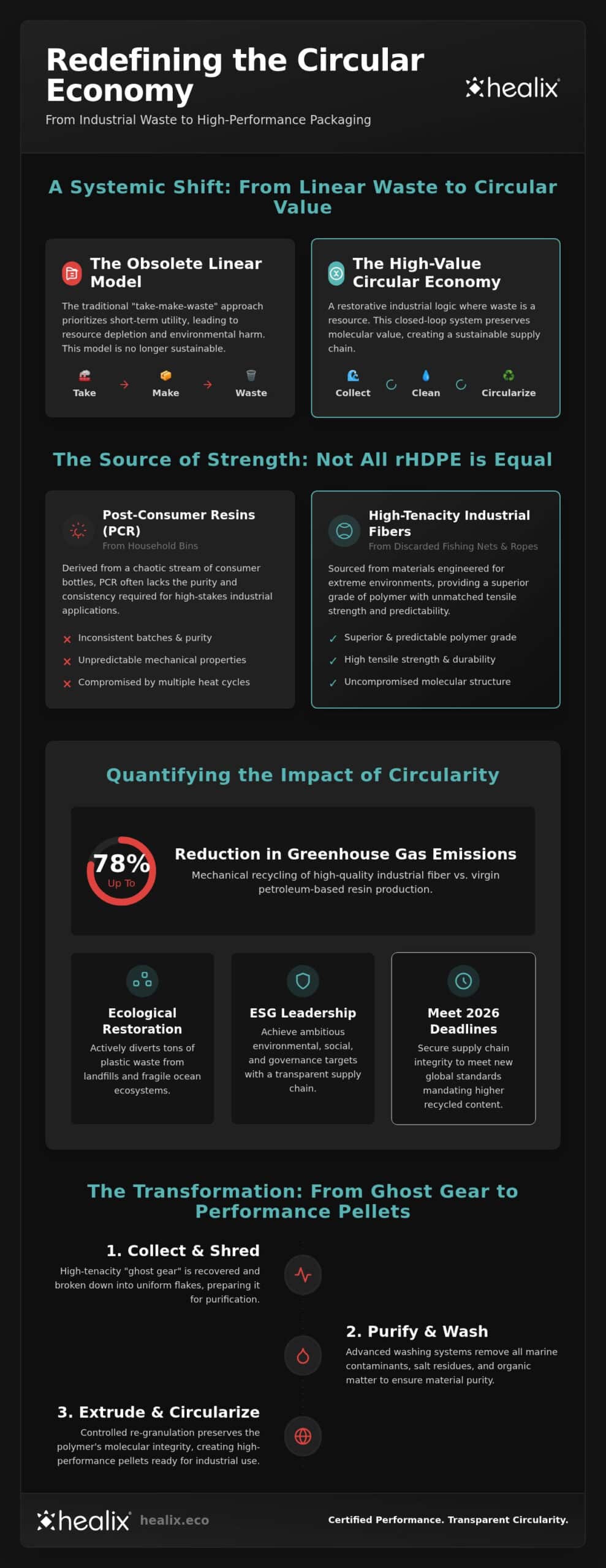
At Healix, we work with waste streams such as discarded fishing nets and other industrial plastic materials. We collect, process and recycle these materials into high-quality recycled plastics that can be used for new products.
What is recycled HDPE?
HDPE, or high-density polyethylene, is widely used for packaging and industrial applications because of its strength, chemical resistance and durability.
Recycled HDPE is produced by collecting HDPE waste, sorting and cleaning it, and mechanically processing it into recycled pellets. These pellets can then be used by manufacturers as a raw material for new products.
The quality of the recycled material depends heavily on the source of the waste and the recycling process. A controlled industrial waste stream can provide a more consistent starting point than mixed post-consumer waste.
Why does the source of the material matter?
One of the challenges with recycled plastics is consistency. Different waste streams can contain different polymers, colours, additives or contaminants. This can make it more difficult for manufacturers to achieve consistent processing and product performance.
Industrial waste streams can offer a more controlled alternative.
Discarded fishing nets, for example, are made from high-performance polymers designed to withstand demanding conditions. When these materials are collected, sorted, cleaned and processed correctly, they can become a valuable source of recycled plastic.
The goal is not simply to recycle more plastic, but to recover materials that can be used again in demanding applications.
Recycled HDPE for packaging
Packaging manufacturers often need recycled materials with predictable processing characteristics and reliable mechanical performance.
Important properties can include:
- Melt Flow Index (MFI)
- impact resistance
- stiffness
- chemical resistance
- colour and consistency
- contamination levels
The right specifications depend on the application and manufacturing process. To see how these factors come together in bespoke beverage and health containers, you can explore Specialised Packaging and Vessel Printing by Prest Packaging.
For some applications, recycled HDPE can be used at high recycled content levels. In others, manufacturers may start by blending recycled and virgin material before increasing the recycled percentage over time.
Testing the material in the intended production process is an important part of this transition.
From discarded fishing nets to recycled plastic
At Healix, we focus on recovering valuable plastic from waste streams that would otherwise have limited value or could end up being discarded.
For fishing nets, the process starts with collection and sorting. The material is then cleaned and prepared for mechanical recycling. After processing, the plastic is converted into recycled pellets that can be used as a raw material for new products.
This creates a more direct connection between waste collection and manufacturing: a material that was previously considered waste becomes a feedstock for a new product.
Recycled versus virgin HDPE
Virgin HDPE offers consistent technical properties, which is one of the reasons it is widely used in industrial applications. The challenge is that it is produced from fossil-based raw materials.
Recycled HDPE offers manufacturers the opportunity to introduce recycled content into their products and reduce their dependence on virgin plastic.
To see how these materials are being utilized by industry leaders, you can discover Duboxx Packaging LLC and their range of eco-friendly solutions.
The right choice depends on the application, required specifications and available recycled material. In many cases, the transition does not have to happen all at once. Manufacturers can test recycled material, adjust processing parameters and gradually increase the recycled content.
How to introduce recycled HDPE into production
Before switching to recycled HDPE, manufacturers should look at both the material and the production process.
A practical approach is:
1. Define the required specifications
Start by identifying the technical requirements of the final product, including MFI, strength, stiffness, colour and other relevant properties.
2. Test the recycled material
The recycled resin should be tested against these requirements and, where possible, in the actual production process.
3. Run production trials
Processing conditions may need to be adjusted when introducing recycled material. Temperature settings, filtration and other machine parameters can affect the final result.
4. Evaluate the finished product
The final product should be tested to make sure that the required performance is maintained.
5. Increase recycled content where possible
Once the material has been validated, manufacturers can determine whether a higher percentage of recycled content can be introduced.
Traceability and recycled content
For companies using recycled plastics, knowing where the material comes from is becoming increasingly important.
Traceability helps manufacturers understand the origin of their recycled feedstock and provides transparency throughout the supply chain.
At Healix, we focus on building transparent supply chains around waste streams and recycled materials. This includes understanding where the material comes from, how it is processed and where the resulting recycled plastic is used.
The Healix approach
Healix connects waste streams with manufacturers looking for reliable recycled materials.
We focus on materials that have the potential to be recovered and used again, including discarded fishing nets and other industrial plastics. Through collection, sorting and mechanical recycling, these materials can be transformed into recycled plastic for new applications.
Our focus is simple: recover valuable materials, process them properly and get them back into the production cycle.
For manufacturers, this means access to recycled materials with a clearer understanding of their origin and technical characteristics.
Moving towards more recycled content
The transition from virgin to recycled plastics is not the same for every product or manufacturer. Material requirements, production processes and regulations all play a role.
But the starting point is the same: finding recycled materials that are technically suitable for the application.
Recycled HDPE can play an important role in this transition, particularly when manufacturers have access to consistent and traceable waste streams.
At Healix, we are working to make that connection between waste and industry easier — turning discarded materials into resources for new products.
Interested in using recycled HDPE or other recycled plastics in your products? Get in touch with Healix to discuss your material requirements.