The ocean’s most pervasive threat is no longer just an environmental crisis; it’s an untapped industrial resource waiting to be reclaimed. You recognize that the pressure to transition from virgin plastics to sustainable alternatives is relentless, yet finding high-quality recycled PE pellets from fishing nets remains a significant hurdle. The path to circularity is often obstructed by concerns over material inconsistency and a lack of verifiable traceability. It’s a challenge that requires more than just a change in supplier; it demands a fundamental shift in how we value and process recovered waste.
This guide demonstrates how these certified circular polymers are redefining the standards for industrial manufacturing. By integrating these materials into your supply chain, you can secure a reliable source of regranulate that meets rigorous technical requirements. We’ll examine the strategic methodology used to retrieve, purify, and transform marine fiber waste into a solution that reduces scope 3 emissions while maintaining the mechanical integrity your products demand. Discover how technical precision and environmental stewardship converge to create a resilient, transparent future for global industry.
Key Takeaways
- Understand how recovered marine fiber waste is transformed into high-purity raw materials to mitigate the global ghost gear crisis.
- Explore the mechanical recycling process that preserves polymer chain integrity to produce high-quality recycled PE pellets from fishing nets.
- Evaluate the technical performance of circular polymers against virgin standards to ensure your product durability remains uncompromised.
- Learn to navigate supply chain complexities by establishing rigorous testing protocols and choosing a partner that guarantees full material traceability.
- Discover how Dutch engineering provides a scalable solution to reduce scope 3 emissions and achieve systemic environmental restoration.
The Industrial Challenge: From Ghost Gear to Circular Polyethylene
The linear economy has reached a terminal point. For decades, the “take-make-waste” model has ignored the true cost of industrial production, leaving a trail of ecological depletion. We must now move toward systemic integrity. Recycled PE pellets from fishing nets represent a bridge between environmental restoration and industrial necessity. These aren’t merely waste products. They are high-purity circular raw materials engineered to replace virgin polymers in the most demanding applications. By redefining waste as a resource, we can transition from a cycle of extraction to a model of restoration.
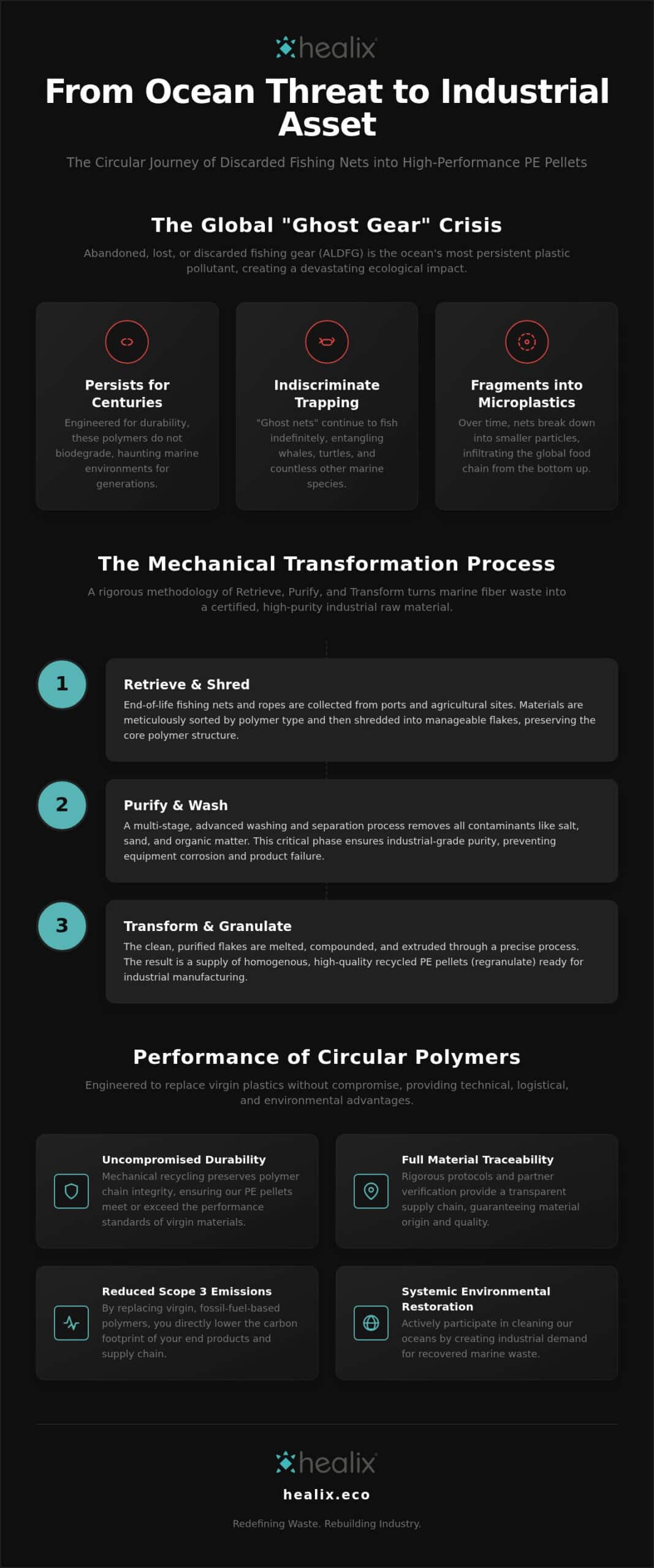
The scale of the “ghost gear” crisis is a global emergency. Abandoned, lost, or discarded fishing gear (ALDFG) haunts our oceans, persisting for centuries. These nets continue to “fish” indefinitely, trapping marine life and destroying delicate ecosystems. Diverting these fibers from our oceans and landfills isn’t just an ecological imperative; it’s a logical industrial strategy. We must view these recovered materials as the foundation of a new, circular supply chain that prioritizes the health of the planet alongside industrial performance.
The Problem with Discarded Fishing Nets
Ghost nets are composed of high-density polymers engineered for extreme durability in harsh maritime environments. This inherent strength makes them a persistent pollutant, but it also makes them an ideal candidate for mechanical recycling. When these nets are left in the water, they fragment into microplastics that infiltrate the global food chain. The urgency of intercepting these fibers is absolute. By retrieving these nets, we prevent decades of ecological damage and reclaim the high-quality polymer chains required for circular manufacturing. It’s a process of turning a silent killer into a sustainable solution.
Why PE Pellets are Essential for Circular Manufacturing
Polyethylene is the backbone of modern industry, serving as a critical component in sectors ranging from automotive manufacturing to high-performance packaging. Its versatility and impact resistance are unmatched. To meet global sustainability targets, forward-thinking manufacturers are increasingly seeking recycled polypropylene for circular manufacturing alongside high-grade PE solutions. Our mission centers on this transformation: turning an environmental liability into a strategic asset. By refining recovered fibers into industrial-grade pellets, we enable a future where product durability is achieved through restoration rather than further extraction.
The Mechanical Transformation: How Fishing Nets Become Certified PE Pellets
Recovering ocean waste is only the beginning of the circular journey. To bridge the gap between a discarded net and a high-performance industrial component, a rigorous technical methodology is required. At our Dutch production facility, we employ a tripartite logic of Retrieve, Purify, and Transform. This approach ensures that recycled PE pellets from fishing nets meet the stringent requirements of modern manufacturing without compromising on quality or safety. By applying precision engineering to environmental restoration, we turn a global crisis into a stable supply of technical raw materials.
Step 1: Retrieval and Shredding of Maritime Waste
The process begins with the systematic collection of end-of-life nets and ropes from international ports and agricultural sites. These materials are often heavily weathered and entangled. We first sort the fibers by polymer type to ensure material purity. Once sorted, the gear is shredded into manageable plastic flakes, preparing the material for deep cleaning. Mechanical recycling is a physical processing method that recovers plastic waste while maintaining its fundamental chemical structure. This preservation of the polymer chain is essential for ensuring the final re-granulate retains its mechanical strength.
Step 2: Advanced Purification and Washing
Industrial-grade purity can’t be achieved through simple rinsing. Maritime waste is typically saturated with salt, sand, and organic matter that would compromise a manufacturing run. We utilize a multi-stage washing process that employs advanced separation technology to strip away these contaminants. This phase is critical; even trace amounts of salt can lead to equipment corrosion or product failure. Our rigorous quality control standards ensure that the flakes are thoroughly decontaminated before they enter the final stage of transformation. This level of precision in mechanical recycling is what distinguishes certified circular plastic from standard regrind.
Step 3: Extrusion and Pelletization
The final phase involves melting the purified flakes and passing them through an extrusion system. During this stage, the molten plastic is filtered one last time to remove any remaining microscopic impurities. The result is the production of uniform, high-quality recycled PE pellets from fishing nets. These pellets are designed for seamless integration into standard injection molding or extrusion lines. By delivering a consistent, certified circular PE re-granulate, we provide manufacturers with the confidence to transition away from virgin polymers while maintaining their existing production speeds and performance standards.
Performance Analysis: Recycled PE vs. Virgin Polyethylene
Industrial transition fails when performance is sacrificed for sustainability. For too long, the narrative has suggested that circularity requires a compromise in material integrity. This is a false choice. When you utilize high-quality recycled PE pellets from fishing nets, you aren’t selecting a secondary material. You’re integrating a technical polymer that’s been engineered to meet the same rigorous standards as its virgin counterparts. Precision in mechanical recycling ensures that the molecular structure remains intact, providing the reliability required for high-stakes industrial applications.
Mechanical Properties and Durability
The assumption that recycled materials are inherently weaker is a relic of outdated processing methods. Modern advanced mechanical recycling preserves the long-chain molecular structure of polyethylene. This preservation is vital for maintaining tensile strength and impact resistance. Our circular PE re-granulate matches virgin standards across several critical metrics:
- Tensile Strength: Maintains the structural load-bearing capacity necessary for industrial piping and automotive components.
- Impact Resistance: Retains the ability to absorb energy without fracturing, ensuring longevity in harsh environments.
- Thermal Stability: Performs consistently during high-temperature injection molding and extrusion processes.
Product performance depends entirely on the purity of the initial feedstock. By focusing on high-density maritime fibers, we ensure a high-quality input that translates into a high-performance output. This allows manufacturers to maintain their product durability standards while successfully reducing their reliance on fossil-based plastics. It’s about achieving technical parity through environmental stewardship.
Sustainability and Carbon Footprint Reduction
The environmental benefit of circular polymers is quantifiable and profound. Producing virgin polyethylene is an energy-intensive process rooted in hydrocarbon extraction. In contrast, transforming recovered fishing nets into pellets requires significantly less energy. This shift directly supports global “Net Zero” goals by lowering the carbon intensity of the raw material supply chain. For those interested in how the extraction sector itself is evolving, check out Complus Systems Group. Using recycled PE pellets from fishing nets allows companies to make measurable progress in reducing Scope 3 emissions. It’s a strategic move that aligns industrial output with planetary boundaries.
Traceability is the foundation of these sustainability claims. We utilize Global Recycled Standard (GRS) certification to provide a transparent audit trail from the ocean to the factory floor. This certification ensures that every batch of material contributes to systemic ecological restoration. It provides the empirical evidence needed for corporate responsibility reporting and consumer trust. Choosing certified circular plastic isn’t just an ethical decision; it’s a calculated investment in a low-carbon industrial future.
Implementation Guide: Integrating Recycled PE into Your Supply Chain
Integrating recycled PE pellets from fishing nets into an established manufacturing line is a calculated technical transition. It’s a process that demands more than a simple substitution of raw materials; it requires a rigorous alignment of supply chain transparency and technical specifications. Success depends on establishing a “chain of custody” that guarantees the material’s origin and purity. By prioritizing traceability, you ensure every kilogram of polymer contributes to your sustainability targets without risking production downtime. Moving toward circularity is a strategic commitment to systemic change.
Selecting the Right Recycled Polymer Grade
Choosing between recycled PE and PP pellets depends on the mechanical demands of your end product. While PE offers superior impact resistance and flexibility for industrial piping or packaging, PP provides the rigidity required for complex automotive components. When evaluating a partner, you must scrutinize their audit reports and certifications to verify circular integrity. We recommend initiating a pilot run phase where a limited volume of recycled material is processed under standard conditions to calibrate your machinery. This methodical approach is the foundation for choosing a circular HDPE supplier that can support long-term industrial scaling.
Testing and Quality Assurance
Validation is the safeguard against inconsistency. To ensure seamless integration, procurement teams must demand comprehensive Technical Data Sheets (TDS) for every batch. These documents provide the empirical evidence needed to maintain manufacturing precision. Key testing protocols include:
- Melt Flow Index (MFI): Measures flow characteristics to ensure compatibility with existing injection molding settings.
- Density Verification: Confirms the polymer’s structural consistency and weight-to-volume ratio.
- Contamination Screening: Ensures the absence of maritime residues that could compromise surface finish or structural strength.
Consistency across batches is the hallmark of Dutch engineering and professional mechanical recycling. By establishing these testing standards, you bridge the gap between ecological intent and industrial reality. It’s about building a resilient supply chain that values scientific rigor as much as environmental impact. To begin your transition with a partner who prioritizes these standards, you can contact our technical team for material specifications.
Scaling Circularity: The Healix Solution for Global Manufacturing
The time for incremental change has passed. Global industry requires a fundamental restructuring of its material dependencies to ensure long-term viability. We provide the technical infrastructure and visionary leadership necessary to make this transition a reality. By transforming environmental liabilities into high-performance industrial assets, we offer a scalable solution for brands ready to lead the circular movement. Our work is rooted in a deep commitment to future generations, ensuring that industrial progress no longer comes at the expense of planetary health. It is a mission of restoration, precision, and systemic integrity.
Certified High-Quality Recycled Pellets
Reliability is the cornerstone of any industrial supply chain. We recognize that manufacturers cannot transition to circularity without a guaranteed, high-volume source of technical materials. Our Dutch facility specializes in the production of both certified recycled PE and PP, serving diverse sectors from automotive to industrial piping. By providing a consistent stream of recycled PE pellets from fishing nets, we enable our partners to meet their production schedules with confidence. Our professional, mission-driven approach ensures that every batch of re-granulate meets the highest standards of purity and performance. We don’t just sell plastic; we provide the building blocks for a restored ecosystem.
Future-Proofing Your Manufacturing with Healix
Early adoption of circular polymers is more than an environmental statement; it’s a strategic imperative. As regulatory pressures mount and consumer expectations shift, the ability to integrate traceable, low-carbon materials will define the leaders of the next industrial era. We support our clients in achieving ambitious sustainability targets by providing the empirical data and technical expertise required for a seamless transition. This collaborative innovation allows your organization to reduce scope 3 emissions while maintaining the product durability your customers expect. It’s a path toward industrial restoration that balances scientific rigor with a bold vision for the future.
The transition from a linear to a circular economy is a collective responsibility. We invite you to join us in redefining the ethical boundaries of manufacturing. By choosing to integrate certified circular plastic into your supply chain, you’re not just improving a product; you’re participating in a necessary global movement. Let’s work together to transform the ghost gear of the past into the high-performance materials of the future. Contact our team in the Netherlands today to begin your journey toward a truly circular manufacturing model.
Advancing Industrial Restoration Through Circular Innovation
The path to systemic environmental health requires a bold departure from traditional extraction. We’ve established that high-quality recycled PE pellets from fishing nets offer more than just an ecological benefit; they provide the mechanical precision and reliability necessary for high-stakes manufacturing. By prioritizing advanced Dutch mechanical recycling and rigorous purification, we bridge the gap between ocean restoration and industrial performance. This transition is no longer a peripheral goal. It’s a strategic necessity for any future-proof supply chain.
Securing a resilient future demands transparency and scientific rigor. Our facility combines engineering excellence with a deep commitment to global supply chain transparency, ensuring that every batch of certified circular plastic meets your technical requirements. We invite you to move beyond the limitations of the linear economy and embrace a model of restoration. Partner with Healix to secure your certified circular plastic supply and lead the shift toward a sustainable industrial era. Together, we can redefine the boundaries of what’s possible for our planet and your products.
Frequently Asked Questions
What are the main applications for recycled PE pellets from fishing nets?
Industrial-grade recycled PE pellets from fishing nets are primarily utilized in sectors that demand high durability and performance. Common applications include automotive components, industrial piping systems, and non-food packaging solutions. These pellets provide the structural integrity required for long-term use in harsh environments. By replacing virgin resins in these critical areas, manufacturers can achieve their circularity goals without sacrificing product reliability. It’s a strategic shift toward systemic restoration.
How does the quality of recycled PE compare to virgin polyethylene?
High-quality recycled PE matches the performance standards of virgin polyethylene through advanced mechanical processing. Our Dutch engineering ensures that polymer chain integrity is preserved during the transformation from fiber to pellet. This results in material that retains essential tensile strength and impact resistance. While some lower-grade recyclates show degradation, our certified circular plastic is engineered for technical parity. You don’t have to choose between environmental stewardship and industrial excellence.
Is the supply chain for recycled fishing net pellets fully traceable?
Full traceability is a non-negotiable standard for professional circular supply chains. We maintain a transparent record of the material’s journey from the retrieval of ghost gear to the production of the final regranulate. This chain of custody is verified through GRS certification, providing manufacturers with the empirical proof needed for sustainability reporting. You can confidently track the ecological impact of your raw materials. Transparency builds the trust necessary for a global circular economy.
What certifications should I look for in a recycled plastic supplier?
Look for Global Recycled Standard (GRS) and relevant ISO certifications to ensure material integrity and environmental compliance. These certifications verify that the supplier follows rigorous protocols for sorting, washing, and processing recovered waste. They also guarantee that the social and environmental impact of the production facility meets international standards. Working with a certified partner ensures your circular PE meets professional industrial requirements. It provides the security of a validated, transparent supply chain.
Can recycled PE pellets be used in food-grade packaging?
Recycled PE pellets from fishing nets are currently optimized for industrial and high-performance applications rather than food-grade packaging. While our purification process is exceptionally rigorous, mechanical recycling of maritime waste generally doesn’t meet the EFSA or FDA standards for direct food contact. These polymers are ideal for automotive components, piping, and durable industrial goods. We recommend focusing on these sectors where material strength and circularity provide the greatest strategic value.
How does mechanical recycling differ from chemical recycling for fishing nets?
Mechanical recycling is a physical process that shreds, cleans, and melts plastic without altering its chemical structure. This method is highly energy-efficient and preserves the polymer’s inherent properties. Chemical recycling, conversely, uses heat or solvents to break polymers down into their molecular monomers. We prioritize advanced mechanical recycling in the Netherlands because it offers a lower carbon footprint while delivering the high-purity circular PE needed for durable industrial goods.
What is the environmental impact of using recycled pellets vs. virgin plastic?
Using recycled pellets significantly lowers your carbon footprint compared to fossil-based virgin plastics. The process of transforming recovered fishing gear consumes less energy than extracting and refining crude oil. It also directly addresses the ghost gear crisis by removing hazardous fibers from marine ecosystems. This dual benefit allows your company to reduce Scope 3 emissions while actively participating in planetary restoration. It’s a measurable step toward a low-carbon, circular industrial future.
How can my company start the transition to circular PE raw materials?
Start your transition by defining the technical specifications and performance requirements of your end product. Request a Technical Data Sheet (TDS) for our circular PE and PP pellets to evaluate compatibility with your existing injection molding or extrusion lines. We recommend a pilot run to calibrate your machinery and validate material performance in a production environment. Our technical team is ready to guide you through this process, ensuring a seamless move toward circular raw materials.