The global industrial landscape has reached a point of no return. As of August 12, 2026, the EU Packaging and Packaging Waste Regulation has fundamentally rewritten the rules of production, making circularity a legal mandate rather than a corporate choice. For many manufacturers, the transition to a circular economy plastic supply chain remains fraught with technical hurdles, specifically the inconsistent quality of recycled polymers and a critical lack of transparency in waste sourcing. You shouldn’t have to choose between meeting 2030 sustainability targets and maintaining material performance.
We understand the gravity of these challenges. By repurposing high-tenacity industrial waste into certified circular PP and PE, it’s possible to secure a reliable supply of re-granulate that matches virgin standards. This article outlines how to navigate the new 2026 regulatory landscape, including the strict PFAS bans and the €0.80 per kilogram plastic tax. You’ll discover a strategic framework to achieve three critical goals: securing high-quality certified materials, reducing Scope 3 emissions, and establishing total traceability from the waste source to the final product.
Key Takeaways
- Transition from a wasteful linear model to a restorative circular economy plastic supply chain that prioritizes long-term value preservation and systemic integrity.
- Identify why industrial fiber waste, such as discarded fishing nets and ropes, serves as the optimal high-tenacity feedstock for high-performance circular polymers.
- Master the precise tripartite mechanical recycling process, purification, shredding, and extrusion, designed to maintain the molecular integrity of recycled PP and PE.
- De-risk your procurement by utilizing third-party certifications like GRS and ISCC+ to ensure full transparency and eliminate the threat of greenwashing.
- Integrate high-quality re-granulate into diverse industrial applications, following a proven roadmap to reduce Scope 3 emissions without sacrificing material performance.
Restoring Systemic Integrity: The Shift from Linear to Circular Plastic Supply Chains
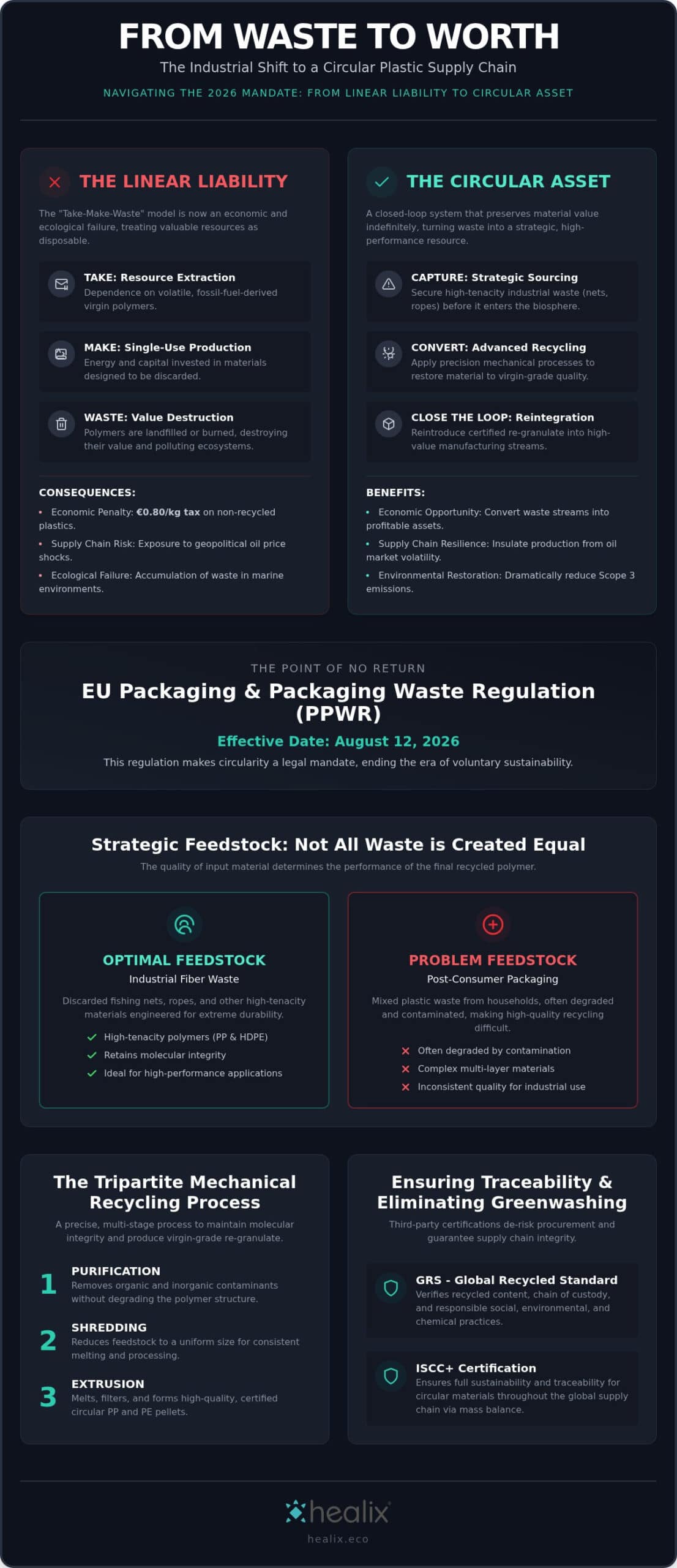
The industrial world stands at a precipice. For decades, global manufacturing has relied on a “take-make-waste” linear trajectory that treats resources as infinite and waste as an external problem. This model is collapsing under the weight of its own inefficiency. As of August 12, 2026, the EU Packaging and Packaging Waste Regulation (PPWR) has turned voluntary sustainability into a legal mandate. To survive this transition, manufacturers must pivot toward a circular economy plastic supply chain. This isn’t a mere recycling initiative; it’s a closed-loop system designed to preserve the molecular value of polymers indefinitely.
True circularity requires a radical re-engineering of the production cycle. It rests on three non-negotiable pillars:
- Capture: Securing high-tenacity industrial waste before it enters the biosphere.
- Convert: Applying advanced mechanical processes to restore material properties.
- Close: Reintegrating certified re-granulate into high-value manufacturing streams.
The Breakdown of the Linear Plastic Economy
Traditional plastic disposal is no longer just an ecological failure; it’s an economic liability. In a linear system, valuable polymers like PP and PE are used once and then buried or burned, destroying the energy and capital invested in their creation. This “single-use” mindset is particularly devastating when applied to industrial fiber waste. Discarded fishing nets and ropes represent a massive accumulation of high-performance material that currently chokes marine ecosystems. Understanding Plastic Recycling Explained reveals that simple downcycling isn’t enough to stop this drain on resources. We need a system that treats waste as a strategic asset rather than a burden. The economic loss of discarding these polymers is staggering, especially as the EU implements a levy of approximately €0.80 per kilogram on non-recycled plastic packaging.
Defining the Circular Value Chain
A circular value chain demands a fundamental shift in how we perceive feedstock. Instead of relying on volatile, fossil-fuel-derived virgin polymers, manufacturers can now tap into high-quality industrial waste streams. This transformation reduces Scope 3 emissions and de-risks supply chains from geopolitical oil price fluctuations. It’s not about making small, incremental tweaks to existing processes. It’s about systemic change. By prioritizing material integrity through technical precision, we can ensure that a circular economy plastic supply chain provides the same performance as virgin materials while restoring the ecological health of our planet. This shift replaces the fragility of extraction with the resilience of restoration.
Strategic Feedstock: Why Industrial Fiber Waste is the Key to Circularity
Industrial fiber waste represents the most technically resilient feedstock available for a circular economy plastic supply chain. While post-consumer packaging is often degraded by multi-layer contamination and short-chain polymers, industrial fibers like fishing nets and agricultural ropes are engineered for extreme durability. They are high-tenacity resources. This inherent strength makes them ideal candidates for high-performance recycling, as they retain significant molecular integrity even after years of heavy use. Industrial plastic pollution is not confined to a single region; it is a global crisis spanning from the depths of the Pacific to the vast farmlands of Europe and North America.
From Ghost Nets to Raw Materials
Abandoned fishing gear, often termed “ghost gear,” is a catastrophic pollutant. It lingers in marine ecosystems for centuries, silently trapping marine life and damaging coral reefs. However, these nets are primarily composed of high-density polyethylene (HDPE) and polypropylene (PP). These are precisely the polymers global manufacturers need to meet looming sustainability mandates. The US National Strategy on Plastic Pollution underscores the urgent need for systemic capture and repurposing of such high-impact waste streams. The primary hurdle is not the material itself but the logistics of retrieval and aggregation from remote coastal regions. Transforming these tangled, salt-crusted fibers into uniform, high-spec pellets requires a level of technical precision that goes beyond standard recycling practices.
Agricultural Plastics: The Unseen Waste Stream
The circularity movement often overlooks the vast quantities of plastic used in the agricultural sector. Ropes, twines, and bale wraps are essential to modern farming operations, yet they frequently end up as landfill or are burned on-site due to a lack of local processing infrastructure. This represents a profound systemic failure and a lost economic opportunity. By standardizing the collection of these agricultural plastics, we can create a powerful cross-industry synergy. The same durable polymers used to haul heavy nets in the North Atlantic can be repurposed for high-stress automotive components or industrial packaging. This process requires a rigorous three-stage approach: collection, purification, and transformation. Manufacturers looking to de-risk their supply chains and reduce carbon footprints can now access recycled fishnets and ropes that have been processed into high-quality re-granulate. This approach effectively turns a global environmental crisis into a stable, high-performance industrial resource.
Technological Transformation: The Mechanical Recycling Process Explained
The transformation of industrial waste into high-performance raw materials isn’t a matter of simple processing; it’s an act of technical restoration. To build a resilient circular economy plastic supply chain, we must employ a methodical, three-stage mechanical recycling framework: purification, shredding, and extrusion. This approach preserves the polymer’s molecular integrity, ensuring that the resulting material doesn’t just resemble virgin plastic but performs with the same technical precision. Unlike chemical recycling, which requires immense energy to break down molecular bonds, advanced mechanical recycling maintains the structural strength of the polymer while consuming significantly less energy. It’s a more efficient path toward decarbonization and systemic stability.
The Purification Phase: Removing Contaminants
Maritime waste arrives laden with salt, sand, and organic bio-fouling. These aren’t just surface debris; they’re aggressive contaminants that can compromise the mechanical properties of the final product. We utilize a rigorous washing and multi-stage filtration process to strip away these elements. This level of purification is essential for creating a high-quality circular economy plastic supply chain that meets the demands of sensitive industrial applications. Without this foundational step, the re-granulate would fail the stress tests required for automotive components or structural packaging. As highlighted in the World Economic Forum’s report on Circular Economy and Global Trade, the ability to harmonize material quality across borders is vital for the health of global manufacturing. High-purity feedstock is the only way to ensure that recycled polymers are a viable substitute for virgin materials.
Precision Extrusion and Pelletizing
Once purified and shredded, the fibers undergo precision extrusion. This is where the material’s physical form is harmonized. We convert the shredded remnants of fishing nets and ropes into uniform, high-performance PP and PE pellets. A critical factor here is the Melt Flow Index (MFI). Manufacturers rely on a consistent MFI to ensure their injection molding and extrusion lines run without interruption. By carefully controlling the thermal and mechanical stress during this phase, we can customize the re-granulate’s properties. This allows us to deliver specific formulations tailored for automotive parts that require high impact resistance or packaging that demands specific tensile strength. The result is a certified circular plastic that defies the misconception of recycled material being inferior. Sourcing recycled polypropylene granules processed through this level of technical precision ensures manufacturers receive a high-spec alternative that supports systemic integrity and long-term industrial resilience.
Ensuring Traceability and Eliminating Greenwashing in the Supply Chain
Traceability serves as the ethical spine of any restorative industrial system. Without a clear, documented path from waste source to final product, circularity remains a hollow marketing claim. Global manufacturers face intense scrutiny as regulatory frameworks, such as the EU Packaging and Packaging Waste Regulation, demand absolute transparency. You can’t simply claim a product is sustainable; you must prove it. A robust circular economy plastic supply chain relies on this evidentiary trail to eliminate the risk of greenwashing and ensure that “recycled” actually means restored. This visibility is what separates true innovators from those merely seeking a temporary marketing advantage.
The Role of Certification Bodies
Third-party certifications like the Global Recycled Standard (GRS) and ISCC+ are non-negotiable for modern procurement. These frameworks provide a standardized Chain of Custody (CoC) model that tracks material through every stage of the transformation: collection, purification, and extrusion. GRS is particularly essential for industrial polymers because it verifies not only the recycled content but also the social and environmental practices at the processing site. This protection shields manufacturers from legal liabilities and the devastating reputational damage of false environmental claims. By August 2026, providing a Declaration of Compliance (DoC) and recent lab reports for chemical migration will be standard practice for any legitimate importer. It’s the only way to ensure systemic integrity.
Transparency as a Competitive Advantage
Moving from vague “recycled content” labels to fully traceable narratives creates a powerful competitive edge. Modern consumers, particularly those purchasing high-end goods like sunglasses or suitcases, want to know the origin story of their materials. They want to see the journey from a ghost net retrieved from the North Sea to a high-performance consumer product. Using digital batch tracking allows brands to build trust through verified environmental impact data. This shift transforms a technical requirement into a compelling brand story. It’s no longer just about compliance; it’s about leadership. To secure your position in this transparent future, you should source certified circular plastic from partners who prioritize technical precision and total traceability. This level of visibility ensures your supply chain is resilient, ethical, and fully prepared for 2030 mandates.
Implementation: Integrating Circular Plastics into Global Manufacturing
Transitioning to a circular economy plastic supply chain requires a move away from transactional procurement toward deep strategic alignment. Manufacturers cannot simply swap virgin polymers for recycled ones without a structured roadmap. This integration demands technical precision and a commitment to systemic change. To ensure a seamless shift, manufacturers should follow a tripartite implementation strategy: audit current material specifications, validate re-granulate performance in existing molds, and secure long-term volume commitments. This methodical approach de-risks the production line while ensuring compliance with the 2026 EU mandates. It’s about building resilience into the very fabric of your operations.
Matching Material Specs to Industrial Applications
Success in circular manufacturing depends on the ability to match recycled polymer properties with the rigorous demands of high-durability sectors. Healix pellets are specifically engineered to meet these challenges. In the automotive industry and the production of industrial pipes, material failure isn’t an option. Our recycled PP and PE maintain the structural integrity required for these high-stress applications. We’ve already facilitated the transformation of discarded fishing nets into premium consumer goods, including suitcases and sunglasses that rival virgin-quality products in both aesthetics and durability. Adapting your injection molding or extrusion processes for high-quality re-granulate often requires only minor technical calibrations. By adjusting pressure and temperature profiles, you can achieve the same cycle times and finish quality as traditional materials. This versatility proves that circularity and high performance are not mutually exclusive; they’re the new industrial standard.
For manufacturers requiring specialized technical materials alongside circular polymers, Plastiques Elastomères provides high-grade PTFE and other technical plastics that meet the strict industrial specifications and regulatory requirements of the 2026 market.
Scalability and Future-Proofing the Supply Chain
Consistency is the bedrock of global production. Manufacturers require a guaranteed volume of certified circular plastic to keep production lines running at scale. Relying on fragmented waste markets is a risk that modern enterprises can no longer afford. Dutch innovation has paved the way for a more stable future by creating centralized, high-capacity processing hubs that turn industrial fiber waste into a reliable feedstock. By establishing a long-term partnership with a dedicated material producer, you protect your supply chain from the volatility of oil prices and the increasing costs of plastic taxes. This isn’t just a sustainability goal; it’s a strategic necessity for future-proofing your business against regulatory and economic shifts. To begin your transition and secure a consistent supply of high-performance polymers, Contact the Healix team today. Together, we can redefine the ethical and technical boundaries of your industry.
Building a Resilient Industrial Future Through Circularity
The path to industrial resilience is no longer a matter of debate; it’s a strategic imperative. As we move beyond the 2026 regulatory threshold, the transition to a circular economy plastic supply chain will define the leaders of the next decade. By prioritizing high-tenacity industrial fibers and demanding absolute traceability through GRS certification, manufacturers can effectively de-risk their operations while restoring ecological health. This transformation requires a commitment to technical precision and systemic integrity.
Healix stands at the forefront of this movement, offering industrial-scale Dutch manufacturing that converts ghost gear and maritime waste into high-performance raw materials. We provide the technical expertise needed to bridge the gap between environmental stewardship and industrial excellence. The tools for change are within reach, and the opportunity to redefine your environmental legacy is now. Join the movement and secure your supply of certified circular plastics. Together, we can build a future where industrial progress and planetary health exist in perfect harmony.
Frequently Asked Questions
What is a circular economy plastic supply chain?
A circular economy plastic supply chain is a restorative industrial system that focuses on value preservation rather than disposal. It replaces the traditional linear “take-make-waste” model with a closed-loop framework. This system relies on three distinct phases: the capture of waste, the technical transformation of materials, and their reintegration into production. By keeping polymers in use indefinitely, it reduces environmental impact and secures resource availability for future generations.
How does mechanical recycling differ from chemical recycling for plastics?
Mechanical recycling differs from chemical recycling by preserving the molecular structure of the polymer through physical processes like shredding and extrusion. It’s a significantly more energy-efficient method that avoids the intense heat and chemical solvents required to break down molecular bonds. While chemical recycling returns plastic to its basic building blocks, advanced mechanical recycling restores the material’s integrity while maintaining a much lower carbon footprint, making it a more immediate solution for decarbonization.
Can recycled PP and PE pellets match the quality of virgin materials?
Yes, high-quality recycled PP and PE pellets can match the performance standards of virgin materials when processed with technical precision. The key lies in the purification of high-tenacity industrial feedstock. By maintaining a consistent Melt Flow Index and removing all contaminants, we produce a re-granulate that’s suitable for demanding applications. This ensures that manufacturers don’t have to sacrifice durability or reliability when transitioning to more sustainable raw material sources.
What is ghost gear and why is it used in the plastic supply chain?
Ghost gear refers to abandoned or lost fishing equipment, such as nets and ropes, that continues to trap marine life and damage ecosystems. We integrate this waste into the circular economy plastic supply chain because it’s composed of high-performance polymers like HDPE and PP. These fibers are engineered for extreme durability, making them an ideal feedstock for high-quality recycling. Repurposing this gear turns a critical environmental threat into a valuable industrial resource.
How do I verify the origin of recycled plastic in my products?
Verifying the origin of recycled plastic requires a robust traceability framework and a documented chain of custody. You should partner with suppliers who provide digital batch tracking and detailed origin narratives for their feedstock. This transparency allows you to follow the material’s journey from the initial waste source to the final pellet. Establishing this evidentiary trail is the only way to eliminate greenwashing and meet the strict reporting requirements of the 2026 EU regulations.
What certifications should I look for in circular plastic raw materials?
You should prioritize materials with Global Recycled Standard (GRS) and ISCC+ certifications. These third-party standards validate the recycled content and ensure that the processing meets rigorous environmental and social criteria. GRS certification is particularly vital as it tracks the material through every stage of the supply chain. These credentials protect your brand from legal risks and provide the transparency needed to satisfy increasingly skeptical consumers and regulatory bodies.
What industries benefit most from circular plastic pellets?
Industries that rely on high-durability polymers, such as automotive, industrial piping, and premium consumer goods, benefit most from high-quality circular pellets. The resilience of recycled PP and PE makes them ideal for structural components that require impact resistance and long-term stability. Manufacturers of high-end lifestyle products like sunglasses and suitcases also use these materials to build compelling brand stories around environmental restoration without compromising on the premium feel of the final product. This same dedication to premium quality and advanced science can be found in modern wellness tools; for example, you can check out Pureffect for innovative molecular hydrogen solutions.
How does using recycled plastic impact my company’s carbon footprint?
Using recycled plastic significantly reduces your company’s Scope 3 emissions by eliminating the need for fossil-fuel-derived virgin polymers. Mechanical recycling requires less energy than primary plastic production, which directly lowers the carbon intensity of your products. By closing the loop on industrial waste, you move away from extractive processes that damage the climate. This shift is a critical step in achieving 2030 sustainability mandates and demonstrating a genuine commitment to global environmental stewardship.