Manufacturers are under increasing pressure to reduce the environmental impact of their products while maintaining the quality and performance their customers expect. Recycled plastics are becoming an important part of this transition, but consistency, reliability and scalability remain essential for industrial applications.
Fishing nets, ropes and agricultural fibres contain high-quality polymers that can be recovered and reused. When processed correctly, these materials provide a reliable source of recycled Polypropylene (PP) and Polyethylene (PE) suitable for a wide range of industrial applications.
This guide explains how advanced mechanical recycling transforms these waste streams into industrial-grade plastic granules. It covers the recycling process, material properties, typical applications and the role recycled plastics can play in automotive, packaging, logistics, construction and consumer products.
Rather than focusing only on waste collection, the industry is increasingly focused on creating reliable secondary raw materials. Manufacturers are looking for recycled plastics that can be processed consistently, meet technical requirements and support their sustainability objectives without compromising product performance.
At Healix, we believe recycled materials should be evaluated on the same criteria as virgin plastics: quality, consistency, availability and technical support. By combining carefully selected feedstock with advanced sorting, cleaning and compounding technologies, recycled PP and PE can become practical materials for industrial production.
This guide provides an overview of how these materials are produced, where they can be applied and what manufacturers should consider when integrating recycled plastics into existing production processes.
From Ghost Nets to High-Performance Polymers: The Circular Shift
Abandoned fishing nets and ropes are a major source of marine plastic pollution. Designed to withstand harsh conditions at sea, these products are made from durable polymers such as Polypropylene (PP) and Polyethylene (PE). While they create environmental challenges when discarded, they also represent a valuable source of high-quality raw material for recycling.
By recovering and recycling these materials, valuable polymers remain in circulation instead of becoming waste. The result is a reliable secondary raw material that can replace virgin plastics in many industrial applications while reducing dependence on fossil-based feedstocks.
From Waste to Raw Material
The transition to a circular economy is changing the way manufacturers view plastic waste. Instead of treating end-of-life materials as something to dispose of, they are increasingly recognised as valuable resources that can be processed and returned to production.
This philosophy extends beyond plastics to other high-value sectors, where specialists like 億鑫鴻景電子 (Yixin Hongjing Electronics) work to recover and recycle electronic components, ensuring that even complex technical materials are preserved for future use.
Fishing nets and ropes are particularly suitable for mechanical recycling because they consist of technical polymers with high mechanical strength. When properly sorted, cleaned and processed, these materials can be transformed into consistent recycled granules suitable for demanding industrial applications.
For manufacturers, this offers several advantages:
- Reduced dependence on virgin fossil-based plastics.
- More efficient use of existing raw materials.
- Lower CO₂ emissions compared to virgin polymers.
- Support for circularity and sustainability targets.
A Reliable Feedstock Requires More Than Fishing Nets
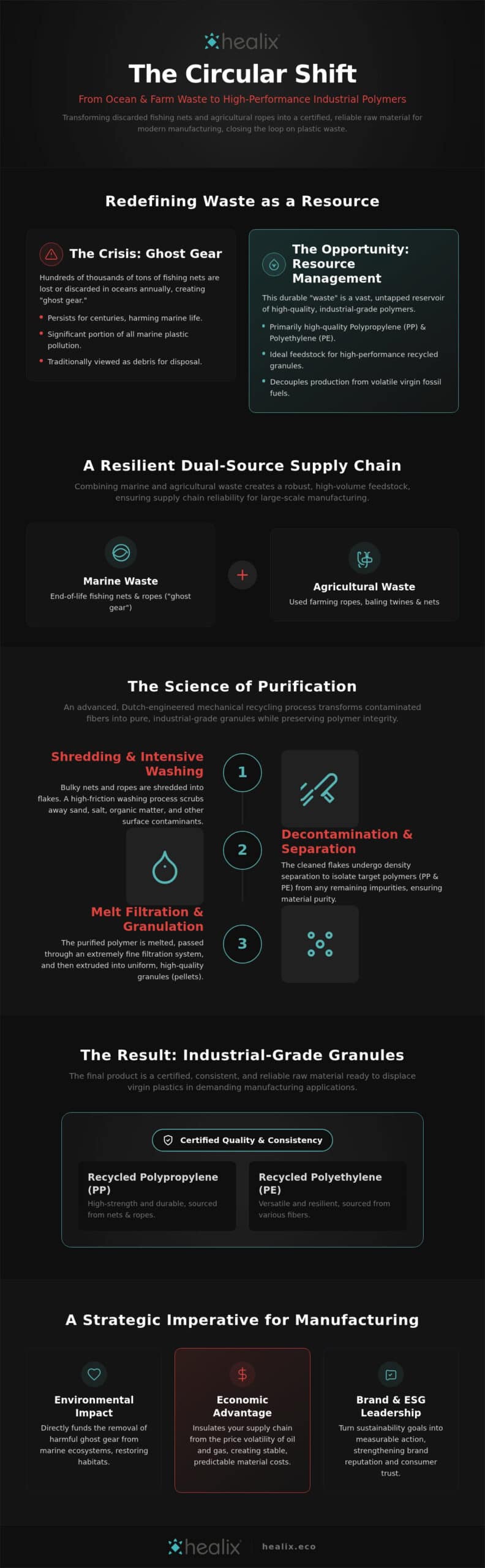
A stable recycling operation cannot rely on a single waste stream. In addition to fishing gear, agricultural ropes, baling twines and nets provide an important source of high-quality PP and PE.
These materials have similar polymer characteristics and can be processed using comparable recycling technologies. Combining marine and agricultural feedstocks creates a more reliable supply of recycled raw materials and helps maintain consistent production volumes throughout the year.
This diversified approach also gives manufacturers greater confidence in long-term supply, which is essential for integrating recycled plastics into industrial production.
Building a Circular Plastic Supply Chain
Recycling is only one part of the circular economy. Equally important is producing recycled materials that meet the technical requirements of modern manufacturing.
Consistent feedstock selection, advanced recycling technology and strict quality control allow recycled PP and PE to be used across a wide range of industries, including logistics, automotive, construction, furniture and packaging.
The objective is straightforward: recover valuable materials, process them to a consistent quality and return them to manufacturers as reliable industrial raw materials. This keeps valuable plastics in use for longer while reducing the need for virgin resources.
Beyond Fishing: The Role of Agricultural Fiber Waste
A truly resilient supply chain cannot depend on a single source. While marine gear is a critical resource, the agricultural sector produces a parallel stream of high-quality fiber waste in the form of farming ropes, baling twines, and nets. This material, also predominantly PP and PE, shares a similar polymer profile with fishing nets and is essential for building a stable, high-volume supply of recycled feedstock.
- Diversified Feedstock: Integrating agricultural fiber waste alongside marine plastics creates a more robust and consistent flow of raw material, mitigating the supply chain fragmentation that often plagues recycling initiatives.
li>Synergistic Processing: The technical challenges of cleaning and processing tough agricultural fibers are similar to those for fishing nets. A specialized facility can handle both, optimizing operational efficiency and material output.
- Supply Chain Reliability: By creating this dual-source model, Healix ensures that large-scale industrial partners can secure the high volumes of certified recycled granules required for continuous production, overcoming a key objection to the adoption of circular materials.
The Science of Purification: How Fishing Nets Become Industrial Granules
Why Purification Matters
The quality of recycled plastic depends on much more than the source material. The recycling process determines whether the final product is suitable for industrial applications.
Fishing nets and agricultural ropes are exposed to sand, salt, dirt, organic residues and other contaminants during use. These impurities must be removed before the material can be processed into high-quality recycled granules. A controlled purification process is therefore essential to achieve consistent material properties and reliable processing.
The objective is simple: recover clean, high-quality polymers while preserving their mechanical properties.
The Recycling Process
Producing industrial-grade recycled PP and PE involves several processing steps, each designed to improve material quality and consistency.
1. Shredding and Washing
Collected nets and ropes are first sorted and shredded into smaller flakes. These flakes are then thoroughly washed to remove sand, salt, organic matter and other contaminants. Multiple washing stages help prepare the material for further processing.
2. Polymer Separation
Fishing gear is manufactured from different polymer types. To produce consistent recycled materials, PP and PE must be separated from other plastics.
Density separation allows individual polymer streams to be isolated, creating a cleaner and more consistent feedstock for the next processing stage.
3. Extrusion and Filtration
After drying, the material is melted and extruded into pellets. During extrusion, the molten plastic passes through fine filtration systems that remove any remaining contaminants.
The result is a clean recycled granule with stable processing characteristics suitable for industrial manufacturing.
Maintaining Material Performance
Cleaning the material is only part of the process. It is equally important to preserve the polymer’s mechanical properties throughout recycling.
Carefully controlled processing temperatures, filtration and material handling help minimise polymer degradation. Depending on the application, additives or stabilisers can also be incorporated during compounding to optimise long-term performance, UV resistance or processing behaviour.
For demanding applications, consistency between production batches is just as important as the material’s technical properties. Manufacturers need recycled plastics that behave predictably in their existing production processes and deliver reliable product performance.
Consistency for Industrial Production
Industrial manufacturers require more than recycled content alone. They need materials with stable quality, predictable processing and dependable supply.
A combination of controlled feedstock selection, advanced purification and strict quality control makes it possible to produce recycled PP and PE suitable for applications in automotive, packaging, logistics, construction and consumer products.
The goal is not simply to recycle plastic, but to produce a secondary raw material that manufacturers can integrate into their production with confidence.
Technical Specifications: Recycled PP and PE Performance
Performance That Meets Industrial Requirements
For many manufacturers, the first question is straightforward: can recycled plastics deliver the same performance as virgin materials?
The answer depends on the quality of the recycling process and the consistency of the feedstock. Well-processed recycled PP and PE can meet the requirements of many industrial applications while offering a significantly lower environmental footprint.
Rather than focusing on recycled content alone, manufacturers evaluate materials based on mechanical performance, processability, consistency and long-term availability. These are the characteristics that determine whether a material is suitable for production.
Recycled Polypropylene (rPP)
Recycled Polypropylene (rPP) combines rigidity, impact resistance and chemical resistance, making it suitable for a wide range of injection moulding applications.
Typical applications include:
- Transport crates
- Industrial pallets
- Automotive components
- Storage systems
- Furniture
- Technical moulded parts
With the right feedstock selection and recycling process, recycled PP provides consistent mechanical properties and reliable processing behaviour. This allows manufacturers to replace virgin PP in many non-food applications without major changes to existing production lines.
Using recycled PP also contributes to lower CO₂ emissions compared to virgin material, helping manufacturers achieve their sustainability targets.
Recycled Polyethylene (rPE)
Recycled Polyethylene (rPE), particularly HDPE grades, offers an excellent balance between strength, flexibility and chemical resistance.
Typical applications include:
- Pipes
- Cable protection
- Injection moulded products
- Industrial containers
- Protective sheets
- Technical components
Clean and consistent rPE performs reliably during extrusion and moulding processes, allowing manufacturers to integrate recycled material into existing production with minimal adjustments.
Material Consistency
Consistent quality is one of the most important requirements for industrial users.
Variations in melt flow, contamination or moisture content can affect processing efficiency and product quality. For this reason, feedstock selection, sorting, washing and quality control are critical throughout the recycling process.
Reliable recycled materials should provide:
- Stable processing behaviour
- Consistent batch quality
- Low contamination levels
- Predictable mechanical properties
- Reliable material availability
These characteristics allow manufacturers to introduce recycled content without compromising production efficiency or product performance.
Supporting Industrial Manufacturing
Today, recycled plastics are used in sectors including logistics, automotive, packaging, construction and consumer goods.
As recycling technologies continue to improve, recycled PP and PE are becoming suitable for an increasing number of technical applications. Manufacturers can reduce their reliance on virgin plastics while maintaining the quality and performance required for industrial production.
Chapter 4 – Applications and Integration
Integrating Recycled Plastics into Existing Production
Switching to recycled plastics does not necessarily require major changes to existing production processes. When recycled PP and PE are produced with consistent quality, they can often be introduced with only minor adjustments to processing parameters.
Successful integration starts with selecting the right material for the application. Factors such as mechanical requirements, processing method, colour and recycled content all influence the final material choice.
Processing Recycled Granules
High-quality recycled granules are designed to process similarly to virgin materials. Depending on the application, manufacturers may adjust settings such as melt temperature, injection pressure or cooling time to optimise production.
For some products, recycled material is blended with virgin polymer to achieve specific technical requirements or to gradually increase recycled content. This allows manufacturers to introduce circular materials while maintaining product performance and production efficiency.
Applications Across Industries
Recycled PP and PE are used across a wide range of industrial sectors. Improvements in recycling technology continue to expand the number of applications where recycled materials can replace virgin plastics.
Automotive
In the automotive industry, recycled PP is commonly used for technical and non-visible components where durability, impact resistance and consistent processing are important.
Examples include:
- Wheel arch liners
- Underbody shields
- Air ducts
- Battery housings
- Interior structural components
These applications help manufacturers increase recycled content while supporting weight reduction and sustainability objectives.
Packaging and Logistics
Reusable transport packaging is one of the largest markets for recycled PP.
Typical applications include:
- Pallets
- Transport crates
- Foldable containers
- Storage bins
- Industrial boxes
These products require materials with good impact resistance, durability and long service life, making recycled PP a suitable choice for many applications.
Construction
Recycled PE and PP are also widely used in construction products where long-term durability is required.
Typical applications include:
- Cable ducts
- Pipes
- Drainage systems
- Protective sheets
- Technical profiles
For many of these products, recycled plastics provide the required performance while reducing the use of virgin raw materials.
Consumer Products
Consumer products increasingly incorporate recycled plastics as brands work towards circular product design.
Applications include:
- Furniture
- Storage solutions
- Luggage
- Household products
- Technical consumer goods
In these markets, recycled materials support both sustainability objectives and growing customer demand for products with a lower environmental impact; for example, you can discover Harley & Marley and their range of premium, fish-based dog food.
Supporting the Transition
Introducing recycled plastics is not only about replacing virgin materials. It also involves material selection, testing and process optimisation.
Manufacturers benefit from working with suppliers who can provide consistent material quality, technical support and reliable long-term supply. This helps reduce implementation risks and makes it easier to integrate recycled plastics into existing production.
As demand for circular materials continues to grow, recycled PP and PE are becoming a practical solution for companies looking to combine technical performance with more sustainable manufacturing.
Chapter 5 – Why Healix
A Reliable Partner for Recycled Plastics
Choosing a recycled material supplier is about more than the material itself. Manufacturers need consistent quality, reliable supply and technical support throughout the development and production process.
Healix focuses on producing high-quality recycled PP and PE from fishing nets, ropes and other industrial fibre waste. By combining carefully selected feedstock with advanced recycling technology, we supply recycled materials that meet the requirements of industrial applications.
Quality and Consistency
Consistency is essential in industrial production. Every batch of material should perform predictably during processing and meet the required specifications.
Our recycling process is designed to deliver:
- Consistent material quality
- Low contamination levels
- Reliable processing behaviour
- Stable long-term supply
- Technical support when required
This allows manufacturers to integrate recycled materials into existing production processes with confidence.
Traceability and Certification
As sustainability requirements continue to increase, transparency has become increasingly important.
Manufacturers need reliable information about the origin of recycled materials and the recycled content of their products. Independent certifications and traceability systems help provide this assurance.
Healix is committed to supplying recycled materials that meet recognised industry standards and support customers in achieving their sustainability and compliance objectives.
Working Together
Every application has different technical requirements. Material selection depends on factors such as mechanical performance, processing method, appearance and end-use.
Our technical team works closely with customers to identify the most suitable material for each application and to support implementation where needed. This collaborative approach helps manufacturers introduce recycled plastics efficiently while maintaining product quality.
Looking Ahead
Demand for recycled plastics continues to grow across industries including automotive, packaging, logistics, construction and consumer products.
At Healix, our goal is straightforward: to provide reliable recycled PP and PE that help manufacturers reduce their dependence on virgin plastics without compromising quality, performance or continuity of supply.
By combining advanced recycling technology with consistent quality control, we help customers make recycled plastics a practical part of their production process.