+31 43 20 03 270  Fregatweg 51, 6222 NZ, Maastricht, the Netherlands

Recycled HDPE Packaging: Circular Material Guide

What if the solution to the global plastic crisis isn’t found in the consumer recycling bin, but at the bottom of the ocean? For years, manufacturers have struggled with the reality that post-consumer resins often fail to meet the rigorous performance standards required for high-stakes industrial use. You understand the mounting pressure to secure high-quality recycled HDPE for packaging while facing the persistent instability of traditional supply chains. It’s a choice between environmental integrity and structural durability that no leader should have to make.

This guide demonstrates how high-quality resins derived from industrial fiber waste like discarded fishing nets are redefining the circular economy. We provide a strategic roadmap to secure certified materials that guarantee both performance and transparency. You’ll discover a three-phase approach to auditing your material sources, validating technical specifications, and quantifying the carbon reduction achieved through industrial-scale circularity. By the end of this article, you’ll have the technical clarity needed to transform your supply chain from a liability into a beacon of systemic change.

Key Takeaways

  • Transition from linear waste models to a circular economy by leveraging high-tenacity industrial fibers that outperform standard post-consumer resins.
  • Master the technical properties of recycled HDPE for packaging to ensure your supply chain meets durability requirements while achieving 100% circularity.
  • Evaluate the environmental impact of your operations by comparing the carbon footprint of petroleum-based resins against mechanically recycled alternatives.
  • Implement a structured two-step process to audit material compatibility and define the optimal percentage of recycled content for your specific packaging lines.
  • Secure your 2026 sustainability goals by adopting a certified “Collect, Clean, Circularize” methodology that guarantees supply chain transparency and material purity.

What is Recycled HDPE and Why Use it for Packaging?

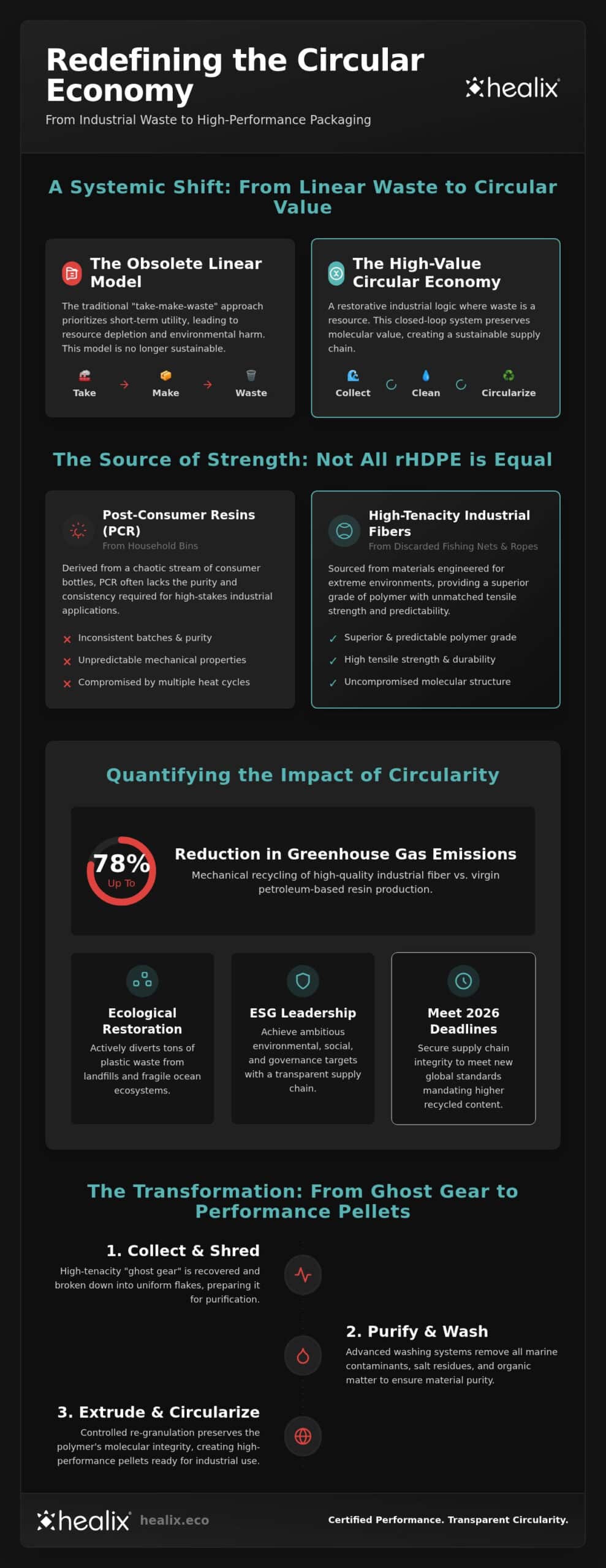
Industrial packaging demands resilience. High-density polyethylene (HDPE) serves as the backbone of this sector because it’s a robust, chemically resistant polymer capable of withstanding extreme mechanical stress. Historically, the industry relied on a linear “take-make-waste” model that prioritized short-term utility over long-term planetary health. Today, that model is obsolete. We’re witnessing a critical transition toward circularity where waste is no longer an endpoint but a high-value resource. By integrating recycled HDPE for packaging, manufacturers move beyond mere compliance; they embrace a restorative industrial logic that preserves the value of every molecule.

The Environmental Imperative for 2026

The year 2026 represents a pivotal deadline for global packaging standards. New regulatory frameworks are tightening, mandating higher percentages of recycled content across all international supply chains. This shift isn’t just about avoiding penalties; it’s about systemic survival and planetary stewardship. Success in this new landscape requires three distinct actions: reducing reliance on virgin resins, optimizing material recovery, and verifying supply chain integrity.

As we approach this 2026 milestone, the shift toward sustainable and natural solutions is also gaining momentum in the health sector, with Relieve Therapeutics offering a guide to natural physical support for 2026 and beyond.

  • Carbon Mitigation: High-quality mechanical recycling processes can reduce greenhouse gas emissions by up to 78% compared to virgin petroleum-based resin production.
  • Ecological Restoration: Transitioning to circular materials actively diverts tons of plastic from landfills and fragile ocean ecosystems.
  • ESG Leadership: Material innovation allows companies to meet ambitious Environmental, Social, and Governance targets through transparent, verifiable supply chains.

The Lifecycle of a Circular Polymer

Mechanical recycling is the primary engine of this industrial transformation. This process involves a tripartite sequence: collection, purification, and re-granulation. When executed correctly, mechanical recycling preserves the molecular integrity of the plastic, ensuring the resulting pellets maintain their original structural properties. While post-consumer recycled (PCR) content from household bins is widely available, it often lacks the consistency required for high-stakes industrial applications.

The solution lies in high-tenacity feedstock. By sourcing from industrial fiber waste like discarded fishing nets and ropes, we access a superior grade of polymer. These materials were engineered for extreme environments, providing a level of tensile strength that standard consumer waste can’t match. Many manufacturers hesitate to make this transition due to persistent misconceptions about performance and contamination risks — misconceptions that are thoroughly addressed in our analysis of marine plastic raw materials and the five myths obstructing circular manufacturing. This high-quality recycled HDPE for packaging bridges the gap between environmental responsibility and industrial performance. HDPE is uniquely suited for this because its molecular structure remains remarkably stable through multiple recycling loops. It doesn’t just survive the process; it thrives within a closed-loop system that supports 100% circularity.

The Science of High-Quality Recycled HDPE for Packaging

Industrial strength requires scientific precision. The “purity gap” between mixed household waste and industrial feedstock defines the difference between a material that merely exists and one that performs. Most recycled HDPE originates from a chaotic stream of consumer bottles, which often leads to inconsistent batches and unpredictable mechanical properties. By contrast, high-quality recycled HDPE for packaging derived from industrial fiber waste offers a predictable molecular foundation. This predictability is essential for maintaining the stiffness and impact resistance required in heavy-duty supply chains. While EPA data on plastic recycling underscores the massive volume of containers processed annually, it also reveals the urgency of refining our recovery methods to meet industrial standards.

From Ghost Gear to High-Performance Pellets

The transformation of discarded fishing nets into high-performance resin follows a rigorous three-phase methodology: shredding, washing, and extrusion. These high-tenacity fibers possess a unique molecular structure engineered for the ocean’s harshest conditions. Unlike consumer plastics, these materials haven’t been compromised by multiple heat cycles or mixed with incompatible polymers. The process begins by breaking down the “ghost gear” into uniform flakes. Next, advanced washing systems remove marine contaminants, salt residues, and organic matter. Finally, the material undergoes controlled extrusion to produce pellets with superior tensile strength. This restorative process ensures that the technical properties of the original polymer are preserved rather than degraded.

Meeting Packaging Performance Standards

Consistency is the primary metric of success in industrial packaging. To replace virgin resin, recycled HDPE must demonstrate unwavering Melt Flow Index (MFI) consistency and high Environmental Stress Crack Resistance (ESCR). Variations in MFI can disrupt high-speed manufacturing lines, while poor ESCR leads to catastrophic failure in containers holding chemicals or heavy loads. We solve these challenges through precise feedstock selection and mechanical refinement. While pigmentation remains a challenge in circular materials, we focus on maintaining the structural integrity required for pallets and industrial containers. This commitment to quality allows businesses to secure certified circular plastic that matches the performance of petroleum-based alternatives. By closing the purity gap, we turn a global environmental threat into a strategic industrial asset.

Comparing Virgin vs. Recycled HDPE: A Strategic Analysis

Petroleum-based resins represent a legacy of linear industrial failure. For decades, the packaging sector relied on the extraction of finite resources, a process that is energy-intensive and ecologically destructive. Transitioning to recycled HDPE for packaging isn’t merely a tactical shift; it’s a strategic pivot toward long-term resilience. Mechanical recycling, particularly when focused on high-tenacity industrial waste, consumes a fraction of the energy required for virgin polymerization. This reduction in energy intensity translates directly into a smaller carbon footprint, allowing manufacturers to decouple their growth from fossil fuel extraction. As carbon taxes become a global standard, the cost-benefit ratio of circular materials shifts from an ethical preference to a financial necessity. Investing in a circularity premium now builds brand equity that pays dividends as consumer and regulatory scrutiny intensifies.

Technical Trade-offs and Solutions

Technical skepticism often centers on perceived limitations in odor, color, and molecular stability. While household waste streams struggle with these variables, industrial feedstock provides a more controlled foundation. We address these challenges through a tripartite strategy: rigorous purification, precise feedstock selection, and strategic blending. Blending recycled resin with virgin content can serve as a bridge to 100% circularity, ensuring performance specifications remain uncompromised during the transition. Safety remains paramount, especially when considering FDA considerations for recycled food packaging to ensure material integrity. The myth of “degraded quality” is a byproduct of outdated recycling methods. Modern mechanical refinement shatters this perception, delivering resins that meet the highest industrial standards. For a comprehensive breakdown of why these quality concerns are often overstated, our guide on the most persistent myths surrounding marine plastic raw materials provides the evidence-based clarity manufacturers need.

Supply Chain Resilience

Resilience is the new currency of global trade. Relying on virgin resin leaves manufacturers vulnerable to the extreme volatility of petroleum markets and geopolitical instability. By contrast, integrating high-quality recycled HDPE for packaging into your portfolio secures a supply chain grounded in industrial waste streams. These streams are consistent, localized, and increasingly regulated for recovery. Transparency acts as your ultimate competitive advantage. In a market where greenwashing is a liability, providing a verifiable, certified trail from “ghost gear” to finished pellet establishes trust. This level of supply chain integrity ensures that your packaging is not just a container, but a testament to systemic restoration and corporate responsibility. To build that trust on a solid foundation, understanding what to look for when choosing a circular HDPE supplier is an essential step for any manufacturer serious about long-term operational continuity.

Recycled HDPE Packaging: Circular Material Guide

Implementing Recycled HDPE in Your Packaging Lines

Industrial transformation requires more than intent; it demands a precise operational roadmap. Transitioning to recycled HDPE for packaging involves a fundamental recalibration of existing manufacturing workflows. Success depends on moving from a legacy of virgin resin reliance to a future of circular precision. This transition isn’t a single event but a methodical five-step progression designed to ensure structural integrity and supply chain transparency.

First, conduct a material compatibility audit for your existing machinery to identify potential technical bottlenecks. Second, define the optimal percentage of recycled content for your specific application; some lines may support 100% circularity while others require a strategic blend. Third, partner with a certified supplier to guarantee feedstock traceability from source to pellet. Fourth, execute pilot runs to calibrate Extrusion Blow Molding (EBM) or Injection Molding settings. Finally, validate final product performance through rigorous stress testing to ensure the packaging survives the rigors of the global supply chain. For those managing bulk logistics, SIA Flexitanks provides the specialized container liners needed to maintain this integrity throughout the journey.

Optimizing Machinery for Recycled Resins

Recycled HDPE often exhibits different thermal behaviors than virgin material. Adjusting temperature profiles for extrusion is essential to maintain a stable melt and prevent polymer degradation. Filtration systems also require attention; high-quality recycled HDPE for packaging demands robust screen pack management to ensure purity during high-speed production. Consistency is paramount. Monitoring wall thickness in blow-molded bottles ensures that your circular transition doesn’t compromise the safety or durability of the finished container.

Certification and Compliance Frameworks

Transparency is the foundation of the 2026 circular economy. Navigating the requirements for GRS (Global Recycled Standard) certification provides the third-party validation your stakeholders demand. This framework relies on a strict chain of custody model, ensuring that every gram of recycled plastic is tracked through the entire production cycle. Preparing for these audits requires meticulous documentation and a commitment to systemic integrity. By aligning your operations with these global standards, you transform your packaging from a simple commodity into a verified environmental asset.

To begin your transition with a reliable partner, you can secure certified circular plastic pellets that meet the highest industrial performance standards.

The Healix Solution: Certified Circular HDPE Pellets

Healix stands as the definitive bridge between a global environmental crisis and a high-performance industrial solution. While others merely participate in the market, we actively seek to redefine its ethical and technical boundaries. Our approach centers on transforming high-tenacity industrial fiber waste into high-quality recycled HDPE for packaging. We don’t just recycle; we restore. By focusing on materials like discarded fishing nets and ropes, we provide a feedstock that is inherently stronger than typical post-consumer waste. This strategic choice allows us to offer certified circular plastic that meets the uncompromising demands of the automotive, industrial, and consumer packaging sectors.

Our methodology follows a precise, tripartite logic: Collect, Clean, and Circularize. We secure raw materials through a global supply chain, ensuring that every net and rope is diverted from fragile marine ecosystems. Next, we employ a certified mechanical recycling process to remove contaminants while preserving molecular integrity. Finally, we circularize the material by producing high-quality recycled pellets that are ready for immediate industrial application. This structured approach provides the clarity and order necessary for brands aiming for 100% circularity by 2030.

Unrivaled Traceability from Ocean to Factory

Transparency is the bedrock of our operations. We track the journey of every industrial fiber we process, providing manufacturers with a verifiable chain of custody that spans from the ocean to the factory floor. This level of traceability is essential for high-stakes industrial brands that must meet strict regulatory quotas and internal ESG targets. Our mission is to transform “Ghost Gear” from a planetary liability into a high-value global resource. By utilizing our recycled HDPE for packaging, you ensure that your materials aren’t just sustainable in name, but restorative in impact.

Collaborating for a Plastic-Free Future

The transition to a circular economy is a collective responsibility that requires bold leadership. We invite manufacturers to move beyond the limitations of virgin resin and join a movement dedicated to systemic change. We don’t believe in one-size-fits-all solutions. Instead, we offer customized resin formulations and re-granulate tailored to meet your specific industrial requirements. Whether you’re optimizing for tensile strength in heavy-duty pallets or chemical resistance in consumer containers, our technical expertise ensures a seamless transition. The time for incremental change has passed; the era of systemic restoration has begun.

Secure your supply of certified recycled HDPE with Healix and lead your industry toward a truly circular future.

Securing the Future of Circular Packaging

The shift toward a circular economy isn’t a distant aspiration; it’s an immediate industrial necessity. We’ve established that high-performance packaging doesn’t require virgin petroleum, provided you source from high-tenacity industrial feedstock. By prioritizing molecular integrity and supply chain transparency, your organization can exceed 2026 regulatory standards while actively restoring marine ecosystems. The transition from “ghost gear” to certified resin represents a triumph of engineering over waste.

Success in this new landscape requires a partner committed to scientific rigor and global stewardship. Healix provides the infrastructure needed to bridge the purity gap, offering materials backed by rigorous certification and a transparent global supply chain. Integrating recycled HDPE for packaging into your production lines secures your operational resilience and demonstrates a profound commitment to future generations.

Take the decisive step toward systemic change. Partner with Healix for high-quality certified circular plastics and transform your industrial footprint. Together, we can turn environmental challenges into enduring circular successes.

Frequently Asked Questions

Is recycled HDPE safe for food-grade packaging in 2026?

Safety depends on the specific decontamination technology and regulatory approval for each application. In 2026, food-grade safety requires rigorous mechanical or chemical purification that meets EFSA or FDA standards for contaminant removal. It’s essential to verify that your supplier uses a validated process with a “no-objection letter” for specific food-contact uses. High-purity industrial feedstock often provides a cleaner starting point than mixed household waste streams.

How many times can HDPE be recycled before it loses its properties?

HDPE can typically undergo approximately ten recycling loops before significant polymer degradation occurs. Each heat cycle slightly shortens the molecular chains, which eventually impacts tensile strength and impact resistance. However, blending recycled content with virgin resin or high-quality industrial feedstock extends this lifecycle. This restorative approach maintains the structural integrity required for heavy-duty industrial applications without compromising the circularity of the material.

What is the difference between mechanical and chemical recycling for HDPE?

Mechanical recycling involves physical processes like shredding, washing, and re-melting the plastic into new pellets. This method is the most energy-efficient and carbon-optimized choice for the majority of industrial needs. Chemical recycling breaks the polymer down into its original monomers through heat or chemical reactions. This process is generally reserved for highly contaminated waste that physical purification methods can’t effectively process.

Can 100% recycled HDPE be used in existing blow molding machines?

Yes, 100% recycled HDPE for packaging can be used in existing Extrusion Blow Molding (EBM) machines with minor technical adjustments. Operators usually need to recalibrate temperature profiles and monitor Melt Flow Index (MFI) consistency to ensure stable wall thickness. High-quality industrial-grade pellets minimize the need for significant machinery modifications. This allows manufacturers to achieve 100% circularity without investing in entirely new production infrastructure.

How does using recycled HDPE impact the carbon footprint of my packaging?

Transitioning to recycled HDPE for packaging can reduce greenhouse gas emissions by up to 78% compared to virgin resin production. This reduction stems from avoiding the energy-intensive processes of petroleum extraction and polymerization. By utilizing mechanical recycling, manufacturers significantly lower their Scope 3 emissions and align with global carbon reduction targets. It’s a decisive action that decouples industrial growth from fossil fuel consumption and environmental degradation.

What certifications should I look for in a recycled plastic supplier?

Look for Global Recycled Standard (GRS) or SCS Global Services certifications to ensure supply chain integrity and traceability. These frameworks provide third-party validation for the three pillars of circularity: material origin, recycled content percentage, and social responsibility. Certifications like ISCC PLUS offer the transparency required to substantiate environmental claims. This level of verification protects your brand from greenwashing risks while building trust with regulatory bodies. For a deeper understanding of how to evaluate partners against these criteria, our guide to selecting a qualified circular HDPE supplier outlines the key performance and documentation benchmarks to demand.

How does industrial fiber waste compare to consumer bottle waste for recycling?

Industrial fiber waste, such as fishing nets and ropes, provides a superior feedstock compared to mixed consumer bottle waste. These high-tenacity fibers are engineered for extreme durability, resulting in a recycled resin with higher tensile strength and purity. Consumer waste often suffers from inconsistent quality due to mixed plastic types and organic contaminants. Sourcing from industrial streams ensures a more predictable material that meets rigorous performance standards.

Is there a price difference between virgin and recycled HDPE?

Price dynamics between virgin and recycled HDPE vary based on petroleum market volatility and regulatory demand. While virgin resin prices track oil costs, high-quality recycled HDPE reflects the processing and collection infrastructure required for true circularity. Many leaders view the “circularity premium” as a strategic investment. It mitigates future carbon taxes, secures long-term supply stability, and builds brand equity that virgin materials simply can’t provide.